
Industry Interview: Baker Powell, Lucky Rabbit Self Tapes
Baker Powell started Lucky Rabbit Self Tapes in 2024 after years of taping his own auditions around Los Angeles. He's also an actor with a strong year of bookings behind him, including The Madison and NCIS, with more projects on the way that haven't been announced yet. I sat down with him to talk about what makes a self-tape session work, what he sees actors get wrong, and how his own look changed the kinds of roles he's been getting called in for.
Who Lucky Rabbit Is
What is Lucky Rabbit, and what did you think was missing from the self-tape studios already out there?
Lucky Rabbit is my self-taping studio. I started it in 2024 after going to several studios around LA myself, some good experiences, some bad. What I noticed a lot was that the readers weren't always actors, and that hurt the performance. I figured it probably hurt other people's performances too, especially newer actors. I had some of the equipment already, so I just needed a camera, lighting, and a studio space to make it happen.
Some places also had flat lighting, and I thought, you're paying a fee for this, so it should be something you can't just do at home. Otherwise what's the point.
What was the first year like, getting it off the ground?
A lot of work. Finding the studio space, getting equipment, getting the business side in order, and then actually getting people to find out about me. Before word of mouth takes off, you're working the internet, making postcards, putting up flyers, running ads. After the first year, word of mouth started to take over, and things started showing up online organically.
The Business and the Craft
Walk me through what a session at Lucky Rabbit actually looks like.
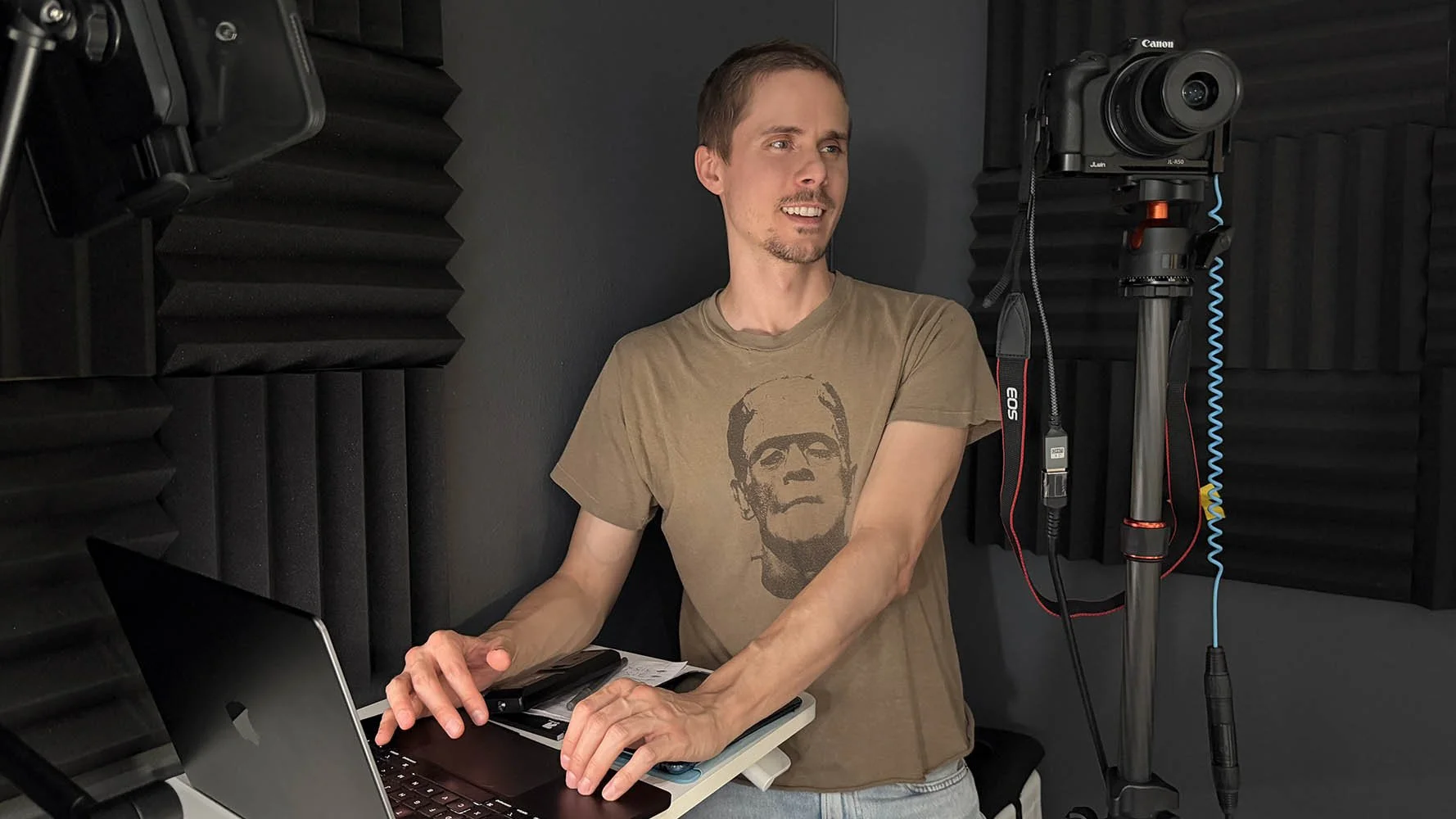
When you book online, you get everything you need to know about what to bring and what to do once you arrive. Before we get into the scene, I get you framed up: standing or sitting, lighting adjusted, and I let you check the monitor so you're happy with how you look. From there we talk through the scene as much or as little as you want, some people like to read through it a couple of times first, some come in ready to just go.
I usually run the first take without giving any notes, since sometimes the first take is the best one. After that, if someone wants feedback or a little direction, I'm there for it. I'd rather stay present through the whole session than rush people in and out.
Sessions are billed by the minute: fifteen minutes is one rate, thirty minutes is another, and anything past thirty minutes is billed per minute after that. Sessions run up to two hours, longer if needed. I don't book appointments back to back the way a lot of studios do, so there's almost always room to add a few extra minutes if someone needs another take or two.
As a general guide, a series regular audition, usually three scenes, tends to take about an hour, sometimes forty-five minutes if someone comes in fully prepared. Commercials move faster, usually fifteen to thirty minutes.
How does a self-tape session compare to actually walking into a casting office?
Self-taping lets you prepare as much as you want beforehand, but it still puts pressure on you to be ready and get it done in a set amount of time, instead of spending hours trying to perfect something you probably already nailed in the first four takes. I think that mindset actually prepares you better for being on set, where you don't know how many takes you're going to get.
What's a mistake you see over and over, and how do you fix it?
Following the stage directions too literally. If the scene says the character cries here, or puts their hands on their hips and looks to the right, a lot of actors hit that exact beat in the exact spot. But if everyone's doing it the same way, nobody stands out. Read the directions, take them into account, but let the moment come out when it feels right to you instead of exactly where the page says it should.
Another one is scenes that don't give you much to do before the dialogue starts, and people just stand there waiting for the other character to speak. Give yourself an action, an entrance, something to be doing, so the scene has life in it before you say your first line.
What's another one, something that's more about performance than technique?
Actors forget to give themselves a reason for why they're doing something. It sounds simple, but that's really it. Even if the scene is set on a spaceship in the future and none of it is real to you, whoever you're talking to, you want something from them. Decide what that is beforehand, even if it's not written into the scene, so you have something to hold onto instead of just saying words.
You watch a lot of actors on tape. What patterns show up in the ones that feel ready versus the ones that don't?
It's usually when people are listening and reacting authentically instead of waiting on their lines or saying something the same way every time. They're making different choices, going inward and coming back up, instead of staring at the reader the whole time waiting to speak. In real conversation, we look away, we think, we come back. Having something closer to an actual conversation is usually what reads as a good audition, instead of someone who's just ready to say lines, ready to cry, ready to act.
What do actors get wrong about slating?
Almost everyone hates it. You're done acting and suddenly you just have to be yourself, and that trips people up. My advice is to throw away the idea that it's part of the tape you're sending off, and just be natural, like you're saying hello to the casting director the way you'd want them to greet you. Do it once or twice and move on.
The Haircut and the Booking Run
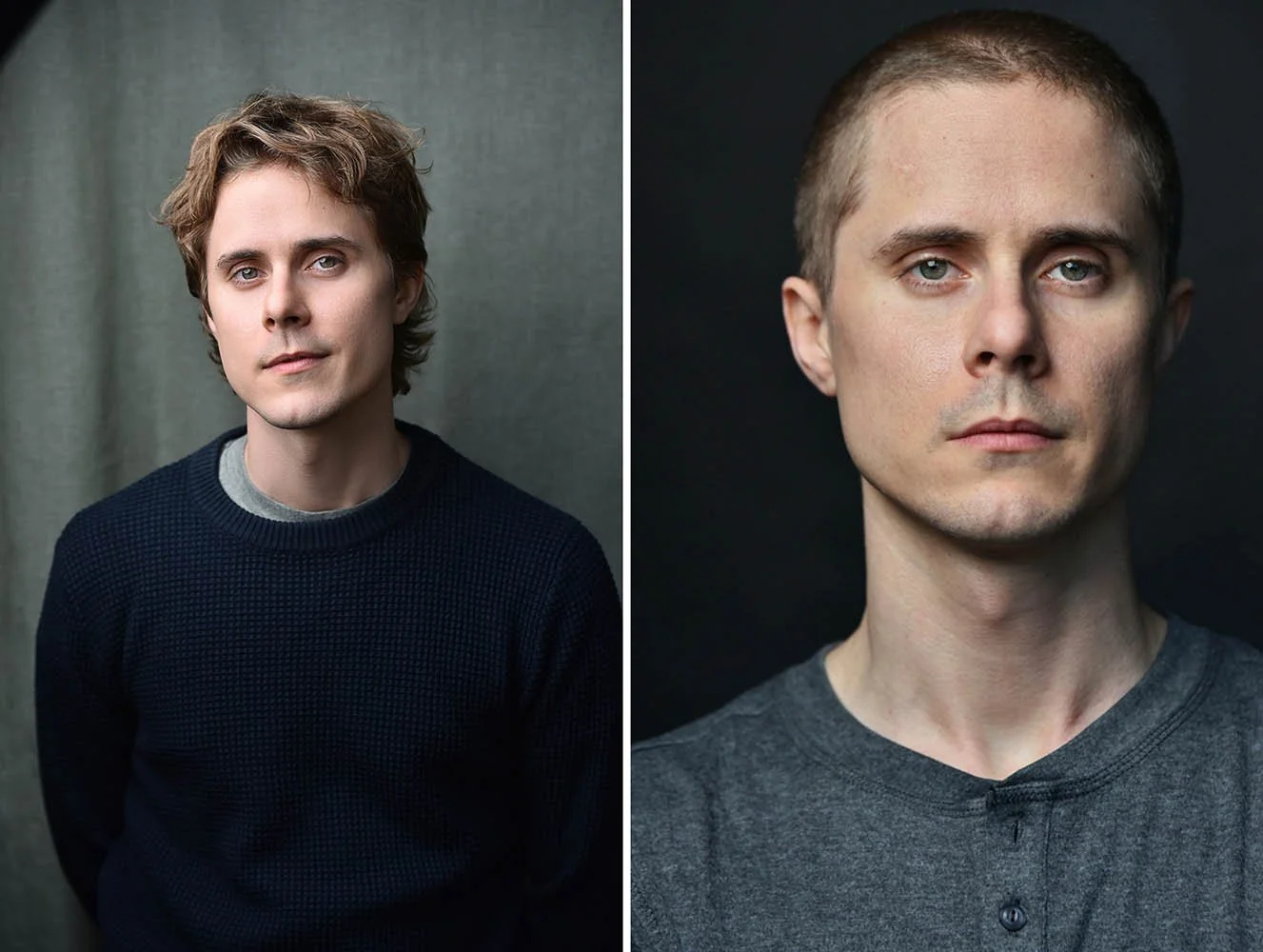
Photos by Marc Cartwright
Last year you cut your hair, which is a bigger deal for an actor than it sounds like. What made you decide it was the right move?
I wasn't sure if it was the right move or not going in. I just knew I wanted to change how I looked physically, in a way that wasn't permanent, instead of just changing outfits. There comes a point where if everything you're doing isn't moving the needle, maybe it's time to change something up. I thought about the types of roles I gravitated toward and wanted to be considered for, and I thought a shaved head could lead there. It did.
Did it feel like a risk at the time, or were you confident going in?
I was pretty confident. I was ready to look a little different, so it was really two things happening at once.
Since then you've had a run of strong bookings, including The Madison and NCIS, plus more that haven't been announced yet. What do you think changed, on either side of the camera?
The types of roles I like to play are more stripped down. With longer hair, people might not see that in me right away, they might see someone who fits more likable, conventional parts. Getting rid of the hair opened the door to different kinds of characters. It wasn't that I had a crazy haircut so now I need to act a certain way. I was already ready for those roles. The look just caught up to what I was already prepared to do.
Self-Tape and Headshots
You spend all day looking at how actors present themselves on tape. Where do you think headshots fit into that same picture?
It's important that a headshot represents not just what you look like right now, but the types of roles you can authentically play. It shouldn't be dressed up as an idea of a character you might play. It should be exactly what you could do right now if someone put you on a set and needed you to show up as that person.
I think there was a thread running through all the different roles I've booked this year, even though they were different characters on different shows. If you're being authentic to who you are, that thread shows up no matter what you're playing. A lot of the characters I've gotten to play recently have been outsiders, or people who made mistakes, or didn't make the best choices. Those are the characters I enjoy playing, and I think it comes from staying true to myself rather than chasing a type.
Closing Frame
Baker's business and mine run on the same word: authenticity. Not as a mood or a talking point, but as a practical standard, showing up as who you are instead of a version dressed up for a part you're hoping to book. I build headshot sessions around that same idea: what an actor can deliver today, not who they were two years ago or who they think they should be.
If you're due for a session that reflects that, read more on when it's time for new headshots.
Lucky Rabbit Self Tapes is at luckyrabbitselftapes.com and on Instagram at @luckyrabbitselftapes.