What Are Cinematic Headshots? A Guide for Actors

"Cinematic headshot" keeps showing up. It's in photographer bios, it's in the way actors describe what they're looking for, and it's becoming part of the everyday conversation around headshots. Ask five photographers what it actually means, though, and you'll likely get five different answers. That's because photographers use the term differently, and a lot of what separates one definition from another comes down to style, technique, and opinion rather than agreed-upon rules.
Before deciding whether you want cinematic headshots, it helps to understand what the word actually describes.
What Is a Cinematic Headshot?
Across the different ways photographers use the term, there's a broad area of agreement. A cinematic headshot generally tries to create the feeling of a moment rather than simply a posed photograph. Recurring ideas include:
A resemblance to a frame or still from a film
Mood or atmosphere
A suggestion of story or character
An actor who appears to be thinking, listening, reacting, or experiencing something
Lighting, background, color, focus, and environment all working together to build that feeling
There isn't a single technical definition everyone agrees on. Treat this as a description, not a checklist a photograph has to satisfy.
Is a Cinematic Headshot a New Type of Actor Headshot?
Commercial and theatrical headshots are established, recognizable categories within actor headshots as a whole. Cinematic functions differently. Some photographers market cinematic headshots almost as their own service. Others use "cinematic" to describe the visual style running through all of their work.
It's probably more accurate to think of cinematic as an approach or an aesthetic than as a third category of headshot you now need. It's also worth knowing that a lot of what's being called cinematic has existed in actor photography for a long time. The term may be newer, or more popular, even when the underlying ideas aren't.
Does Cinematic Mean Dramatic Lighting?
Some photographers build cinematic headshots around sculpted light: deeper shadows, contrast, dimensionality, a visibly moodier treatment. It's an understandable association. Film frequently uses lighting on purpose to build atmosphere and depth.
Other photographers create images they'd call cinematic with natural light, softer transitions, and brighter exposures. For them, the quality comes less from the lighting setup and more from expression, environment, color, or the sense of a captured moment.
There's no single "cinematic lighting" setup. Dark doesn't automatically mean cinematic.
Does a Cinematic Headshot Need an Environmental Background?
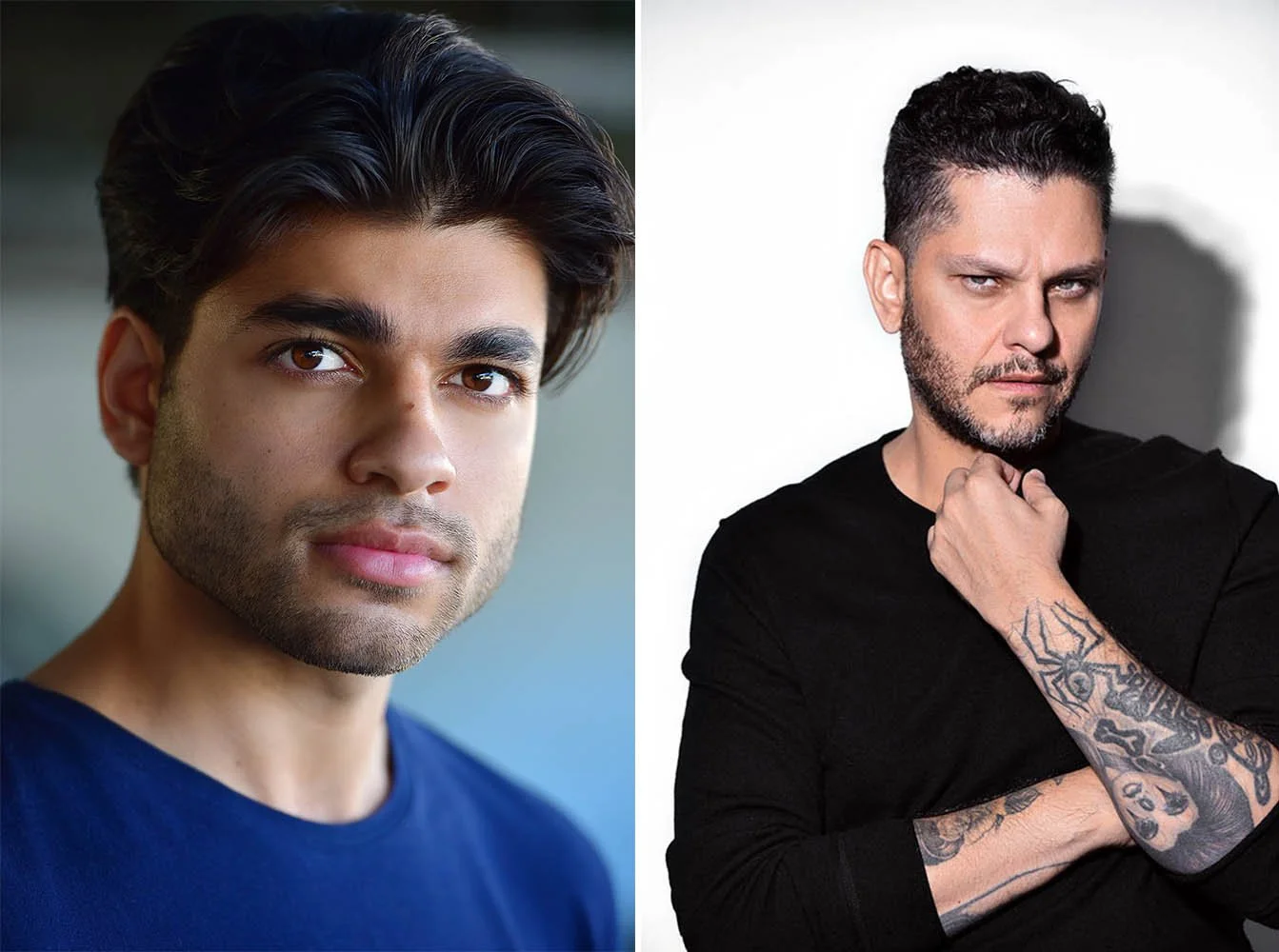
Some cinematic headshots lean on environment: a recognizable kind of location, texture, architecture, a sense of a world around the actor. The setting contributes to the implied story.
Others use simpler backgrounds, studio setups, or heavily blurred environments, and get their cinematic feeling from lighting, color, expression, and direction instead.
In my own work, I don't think the background itself is what makes an image cinematic. I've seen plain backgrounds that feel just as cinematic as environmental ones. What actually matters to me is whether the background is distracting. If it's too busy, my eye doesn't know where to land, and that pulls attention away from the actor. The point of a headshot is to give information about the actor, so I don't want anything hidden in shadow or competing for attention. I generally want the eyes to be the most prominent part of the photograph, with everything else in the frame supporting that instead of fighting it.
Does Cinematic Mean Shallow Depth of Field?
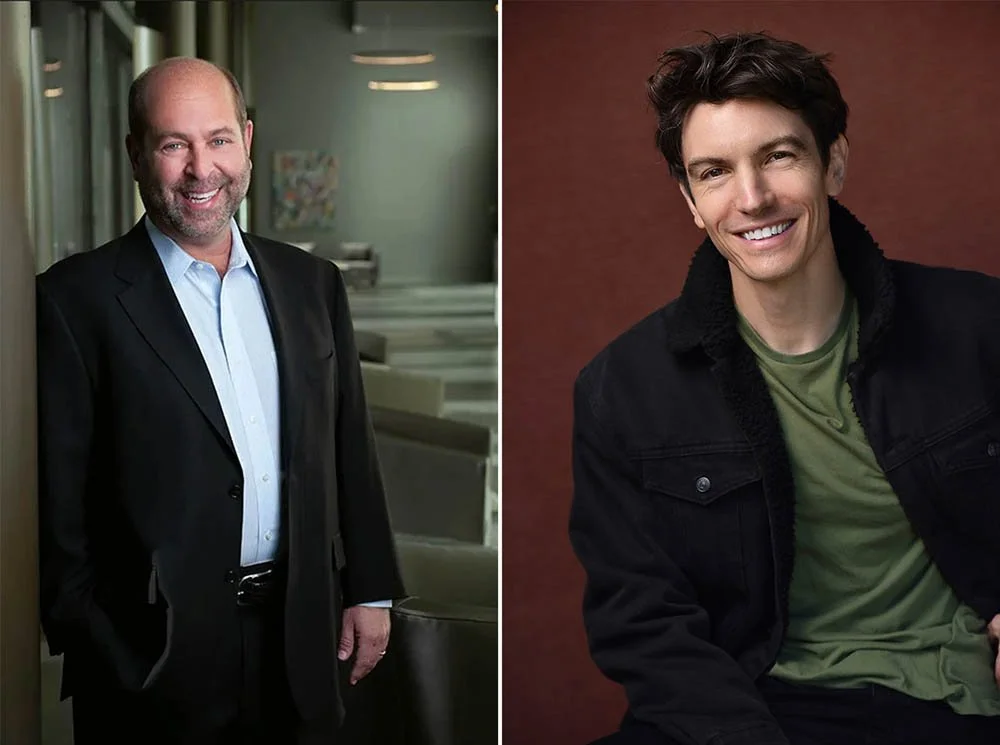
Shallow depth of field, the background softness and separation that pulls focus toward the subject, is often associated with cinematic imagery. It can absolutely contribute to that feeling. But it doesn't automatically create story, presence, or emotional context on its own, and a photograph doesn't stop being cinematic just because more of the environment is visible. It's a technique that can support the goal. It isn't the goal itself.

Does Cinematic Mean Serious?
This is worth untangling, because it's an easy assumption to make. A lot of images marketed as cinematic are serious, restrained, shadowed, or intense, and that can leave actors thinking cinematic means brooding. But cinema includes comedy, warmth, vulnerability, awkwardness, energy, and joy just as much as it includes tension and intensity. A cinematic headshot doesn't have to be dark or serious to work.

I've had actors come in wanting something moody and intense that just doesn't match who they are. Someone who's genuinely light and quirky, but who's decided they want to look brooding for the camera. I can direct a person toward the illusion of a character. But if they aren't realistically going there, it starts to feel like a costume, and it usually becomes apparent during the session.
When I notice that happening, I ask questions. What about this type of character drew you in? If you go out for this type of audition, what's the feedback usually been? Do you get called in for this type of role? Is there ever a version of you in real life that's like this? None of that is about whether you can act it. It's about what you're bringing into the room right now.
I've worked with shy people who turn into dynamic, bold performers the moment the camera is on. I've worked with people who are funny and quirky off camera and who read as serious once a lens is pointed at them, for reasons that have nothing to do with what they're capable of. So I don't think it always comes down to who someone is off camera. I think it comes down to who can authentically bring that character into the room, whether that's who they already are or how they're able to transform once they're there.
Direction vs. Posing
Some photographers talk about creating thought, reaction, and internal activity rather than issuing purely physical instructions: chin down, eyes here, turn your shoulder. This doesn't mean physical direction is wrong. Headshot photographers still direct body position, angle, expression, and composition. The difference is that physical direction alone shapes what someone looks like, while internal direction shapes what appears to be happening in the photograph.
In practice, this depends entirely on the person in front of me. I talk to actors before and during a session because I want to learn about them, what drives them, how they carry themselves. I build direction from that. When you're talking with someone about something they're genuinely interested in or inspired by, you get a genuine reaction. When all you give someone is movement instructions, you open the door to a flatter performance, nervousness, and overthinking.

When I Think Cinema, I Think Story
For most of my career, I saw the same kind of image over and over: a pretty shot of someone's head and shoulders that told me almost nothing about them beyond hair color, eye color, skin tone, and whether I found them attractive. Things I could see on a flat, two-dimensional piece of paper. Nothing made me want to know more.
Then I started seeing images where the eyes spoke. The person stopped being flat and became three-dimensional. I wanted to know who they were, and I got some nuance into their personality from a single still photograph. That's what brought the humanity into it for me, and entertainment is built on connection.
I know some markets and traditions genuinely value a more static, neutral shot, and I understand the reasoning: it leaves room for a casting director to project their own vision onto the person. That's a legitimate approach, not a wrong one. But when I think about how I read people, and how I've selected actors for my own projects, a headshot that gives me a peek into someone's personality tells me something useful. It can show me a side of someone I wouldn't have expected from their appearance alone, and that has value.
That's really the core of it for me. When I think cinema, I think story. A regular headshot shows you what the person looks like. A cinematic headshot tells you something about the person.
Does Every Actor Need Cinematic Headshots?
No. I haven't seen convincing evidence that every actor now needs cinematic headshots, and it's worth being skeptical of anyone who tells you otherwise. You'll sometimes hear that they get more auditions, generate more callbacks, or are becoming the new standard. Unless someone can point to real evidence behind a claim like that, treat it as marketing, not fact.
The better question is what you actually respond to. Some actors are drawn to mood, atmosphere, and visual storytelling. Others prefer something cleaner, brighter, and more straightforward. Neither one is inherently better than the other.
The Photographer's Style Should Fit the Actor
Photographers naturally develop a recognizable aesthetic and a set of techniques they gravitate toward. Actors have their own range, personality, and way of presenting themselves. The goal isn't to figure out how to make yourself look cinematic. It's to figure out whether a particular photographer's interpretation of cinematic actually feels like you.
That's a useful lens when you're comparing photographers. Look through full portfolios rather than reacting to the word on its own. One photographer's cinematic might be dark and sculpted. Another's might be natural and intimate. Another's might be colorful and environmental, or polished and studio-based. The label matters less than what the photographer actually produces.
So What Should Actors Look For?
A few questions worth asking yourself as you look at a photographer's work:
Do I recognize myself in this style?
Does the mood feel appropriate for me?
Do the photographs feel natural, or overly constructed?
Do I like how this photographer uses light?
Do I prefer their backgrounds and environments?
Do the actors in this portfolio look individually represented, or does everyone get roughly the same treatment?
Does this photographer's version of cinematic match what I pictured when I heard the term?
It's also worth asking the photographer directly what they mean by cinematic before you book. The word gets used differently enough that it's easy to assume you're aligned when you're not, and if you have a specific vision in mind, that's not something to leave up to interpretation.
Final Perspective
There probably isn't one recipe for a cinematic headshot. It doesn't have to mean dark, or natural light, or studio light, or shallow focus, or environmental, or serious. Those are all photographic choices, not requirements. The common thread is more conceptual: the photograph attempts to feel like a moment rather than simply a record of appearance.
When I think cinema, I think story. A cinematic headshot can suggest something about the person in the frame. How a photographer creates that feeling is where style, technique, and interpretation begin. And in the end, the interpretation that matters most is the one that feels most like you.