
Industry Interview: Jamie Fisher on Actor Headshot Makeup
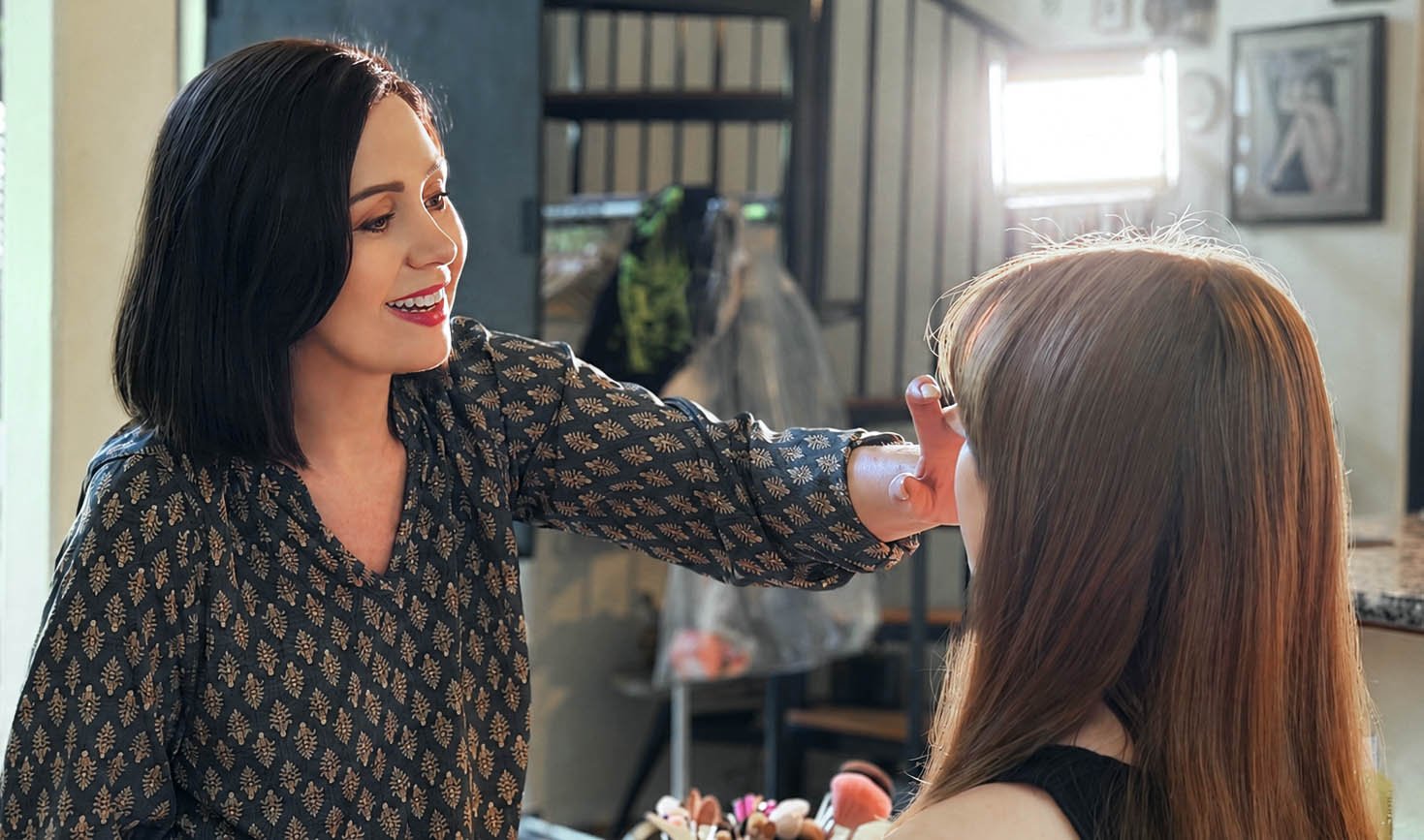
Ask an actor what worries them about headshot makeup, and the answer usually comes back the same way: they're afraid they won't look like themselves anymore.
Jamie Fisher, a makeup artist who works regularly with actors on headshot sessions, hears that concern often enough that it's a worry she takes seriously. Her standard is simple to state and harder to execute than it sounds: the actor in the finished headshot should still be recognizable as the actor casting sees next, in a self-tape. Not a different person. Not a character built for the photograph. The same person, presented well.
That idea runs through everything below, from what “natural” actually means to how to prepare your skin to whether you need a professional artist at all. Some of it comes from Jamie's years working with actors specifically. Some of it comes from my own experience directing sessions around feedback I've received from casting directors and talent reps. Between the two, the goal is to leave you with a clear sense of how to think about headshot makeup, not just a list of rules to follow.
What Headshot Makeup Is Actually Trying to Accomplish
Jamie draws a sharp line between headshot work and the other photography she does. Fashion work is about angles, about looking striking, about getting a shot that reads as beautiful. Headshots are about something narrower and more specific: the person, what they're bringing to the camera, and what casting is going to take from that photograph.
That distinction matters because a lot of actors walk in assuming the goal is the prettiest possible version of themselves. It isn't. The goal is a version of them that communicates the right character or type, in a way that's still true to who they are. Makeup and hair support that. They don't create it. That's the same standard I write about in what a good actor headshot is supposed to do: accurate before it's flattering.
Will Professional Makeup Still Look Like Me?
It's a legitimate question, and Jamie doesn't treat it as an overreaction. Actors have a real stake in the answer, because a headshot isn't the end of the process. It's part of how an actor is initially presented to casting, whether the next step happens in the room or through a self-tape.
Her standard, in her own words: “I want you to look like you're going to look in your self-tape.” That's the test. Not whether the photo is flattering. Not whether it's polished. Whether it still holds up as the same person once casting moves past the photo and starts watching the actor perform.
The reason that standard matters is practical, not abstract. If a headshot creates one impression and the self-tape presents something noticeably different, the disconnect can work against the actor. If the tape doesn't match the impression created by the headshot, that read can break down before the actor gets a chance to act.
So the concern about not looking like yourself isn't something to talk actors out of. It's the right instinct, aimed at the right target.
What Does “Natural Makeup” Actually Mean?
“Natural doesn't always mean less,” Jamie says. That's most of the confusion, solved in one sentence.
Some actors think of natural as a full face done in browns and neutrals, no matter how much product that actually involves. Others mean something closer to bare-faced: tinted moisturizer, a little mascara, nothing else. Both may be what someone means when they ask for “natural.” They're just not the same thing, which is exactly why the word causes confusion before a session even starts.
This is part of why Jamie asks for inspiration photos before an actor sits in her chair. Natural to her might not be natural to you, so rather than guessing, she wants to see what you mean by it.
Where natural actually breaks down, in her view, is when makeup starts changing the structure of the face: heavy contour, heavy highlight, the kind of work that reshapes rather than presents. Color choices can stay light and still look like a lot. Structural changes are what push a look into unnatural territory, regardless of how much product was used to get there.
There's also a harder truth in here that's worth stating plainly: natural is more difficult to execute well than a full glam look. Making skin look flawless while still looking like skin takes more skill than layering on visible coverage. That's worth knowing before an actor assumes a “natural” request is the easy, low-effort option for a makeup artist.
Do You Actually Need a Professional Makeup Artist?
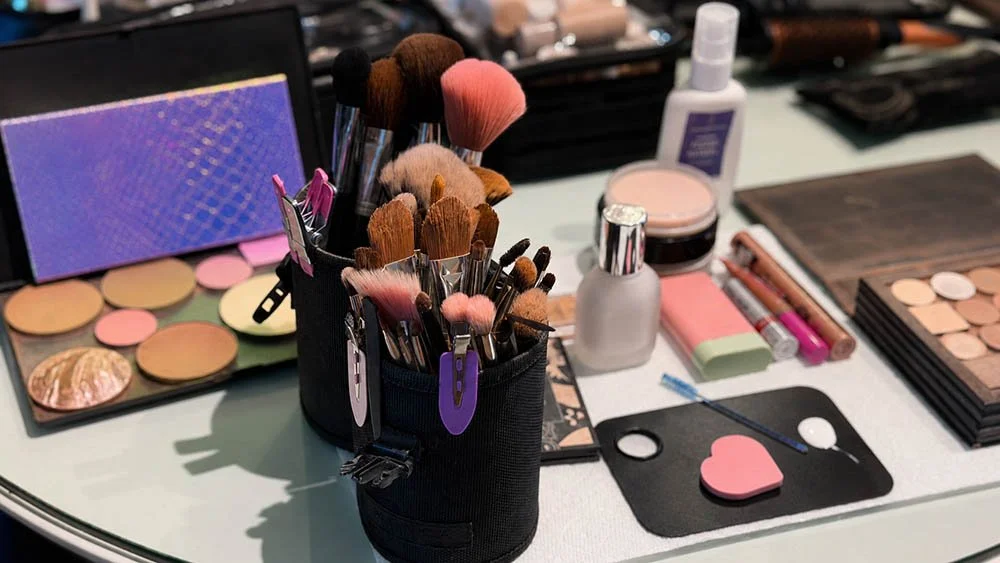
Jamie's answer to this is more nuanced than a photographer selling makeup services might want it to be: no, not necessarily.
Some actors may already be perfectly capable of handling themselves. If someone has great skin and hair and knows how to prepare, Jamie doesn't think hiring a makeup artist is automatically necessary. Her example is simple: a guy with flawless skin and good hair might just need blotting papers to manage shine on camera, nothing more.
The catch is that being good at everyday makeup isn't the same as being good at makeup for a camera. Jamie's most specific example is color matching. It's easy to think you know your own skin tone from applying foundation in normal light. Cameras and studio lighting are less forgiving. A color that looks right in the mirror can show visible lines at the jaw or read differently against the neck and chest once it's on camera. That gap is where a lot of self-done makeup goes wrong, even for actors who are genuinely skilled at it for everyday purposes.
Her suggestion for checking yourself honestly: compare photos of your own makeup work against the actual work on a photographer's site. Not “am I good at makeup,” but “am I good at makeup that holds up in a photograph.”
If you're doing your own makeup, there are a few things worth prioritizing over trying to do everything. Jamie puts a lot of emphasis on the basics: a consistent skincare routine, sleep, and hydration. Blotting papers help control shine without building up a layer of powder. A color-correcting primer, a green-toned one made specifically for redness, can also stand in for foundation in some cases, particularly for men who don't want a heavier look.
Asked what an actor should focus on if they could only get one thing right on their own, Jamie laughed and essentially conceded the premise: “Maybe they should get a makeup artist.” Her point was simple. If you're going to do it yourself, there isn't one magic step that makes everything else irrelevant.
Choosing and Communicating With Your Makeup Artist
Jamie's first piece of advice on finding an artist has nothing to do with searching on your own: ask your photographer. Photographers who shoot regularly tend to have artists they work with repeatedly, and that relationship exists for a practical reason. Every photographer shoots differently, some push saturation, some shoot with a brighter flash, and an artist who already understands those tendencies can account for them from the beginning rather than learning the photographer's preferences during the session.
When it comes to evaluating a portfolio directly, Jamie's warning sign is straightforward. If every image on an artist's page is heavy glam, dark smoky eyes, full transformation, that's probably what they're best at and most comfortable doing. An actor looking for something grounded and natural isn't likely to get it from that artist, no matter what's discussed beforehand. The portfolio is a reasonably honest signal of what an artist can deliver, so it's worth looking for the specific kind of work you actually need rather than judging the work in general. Range matters too: an artist whose portfolio shows different skin tones and face shapes handled well is a better sign than one who can only do a single look on a single type of face.
What should you send your makeup artist beforehand?
Before a session, Jamie wants a handful of things from the actor: a recent photo they like of themselves, a couple of old headshots along with what they did and didn't like about them, any allergies, and any consistent personal habits, winged eyeliner, false lashes, a particular brow shape, that they're likely to reproduce in their self-tapes. If that's part of how casting already sees them, it needs to be part of the headshot too, even if it isn't what Jamie would necessarily choose on her own. It's the same kind of upfront thinking I cover in what to ask yourself before booking a headshot session.
That expectation runs in both directions. If an actor is genuinely good at something themselves, doing their own eyebrows, for example, Jamie would rather they handle it than have her guess at something they already do well. The direction actors should give their artist isn't about controlling the process. It's about sharing the specific, personal details that generic professional judgment can't account for on its own.
The same principle carries into the session itself. If something doesn't feel right while sitting in the chair, the moment to say so is right then, not after everything is finished. “You're not going to hurt my feelings,” Jamie says. “I'm giving it my best guess, but this is collaborative.” She's making an informed professional judgment, but she can only guess at personal preference without being told. Waiting until the end doesn't just risk an outcome the actor doesn't like. It wastes time that was already paid for, and it can leave the rest of the session rushed.
Preparing for Your Headshot Session
Jamie's preparation advice comes back to one idea repeated in different forms: plan ahead. Most of what goes wrong on shoot day isn't a makeup problem. It's a timing problem, something that needed a week or a month of lead time and instead got noticed the morning of the session.
On the skin side, her guidance is fairly specific. Stay out of the sun for about a week before shooting, since a recent tan, visible lines, redness, or peeling skin can create problems that didn't need to be there. Skip skin treatments in that same window, and if Botox is part of your routine, Jamie recommends building in real lead time rather than scheduling it close to the shoot. If there's a new product an actor wants to try, the week before a session isn't the time to test it. Try it months out instead, so there's time to see how skin actually reacts.
The basics matter more than people expect: sleep, water, and skipping alcohol the night before. For puffiness specifically, Jamie recommends splashing the face with ice water, or keeping chilled under-eye gel pads on hand to use the morning of.
On shoot day itself, she wants actors to arrive without makeup on, since removing it beforehand can leave skin red or irritated right before the camera comes out. A light, oil-free moisturizer is fine, and for actors with more mature skin, she recognizes that skipping moisturizer entirely isn't realistic. What she does ask actors to skip is SPF. This is her own shoot-day recommendation based on her experience, not a universal rule about sunscreen: some formulas, particularly certain mineral sunscreens, can leave a white cast or photograph lighter under studio flash.
The other planning failure she sees constantly involves hair and grooming. Actors show up having meant to get a haircut, touch up their roots, or get their brows shaped, and didn't get to it in time. Jamie's point here is direct: the headshot needs to reflect the best version of the actor on the day of the shoot, not the version they'll look like next week once the appointment they meant to book actually happens.
Preparation isn't only about avoiding problems, though. Things do come up, and Jamie's approach to handling them in the moment is worth knowing before shoot day arrives. A breakout the morning of a session isn't something to panic over. Her advice is simple: don't pop it, use a wrapped ice cube or cold compress to help bring down inflammation, and Jamie also likes sulfur-based spot treatments, saying she's seen them visibly calm redness relatively quickly. Beyond that, she'd usually rather not bury a blemish under heavy coverage. A breakout can often be handled in retouching afterward, which keeps the skin looking like skin instead of like a thicker layer of makeup built specifically to hide one spot.
That same reassurance extends to acne, redness, dark circles, oily skin, and dry skin generally. Jamie is straightforward about this: these are normal concerns, and makeup and retouching can usually address them without the actor needing to panic about them beforehand. For dry skin specifically, Jamie would rather see someone addressing it consistently in the weeks before a shoot than trying to solve it the morning of.
Before your session: plan hair, color, and brow appointments weeks ahead. Avoid skin treatments in the week before, and experiment with new skincare products well in advance rather than close to your session. Stay out of the sun. Arrive without makeup. Tell your artist about allergies and any makeup you wear consistently in self-tapes. And if something doesn't feel like you once you're in the chair, say so early.
Different Looks, Different Roles: Makeup and Casting
Actor headshots may need to support more than one type of role, and Jamie's approach to that is consistent: change is subtle. Jamie tends to make commercial looks a little healthier, more radiant and inviting, with slightly more color in the cheeks. Theatrical makeup depends much more on the specific character, and there's more room for it to shift depending on what's being cast. But in both cases, Jamie is clear that the differences between looks stay subtle rather than dramatic, the same distinction I go into in commercial vs. theatrical headshots.
That's a point worth underlining, because it connects directly to how I think about a session as a photographer. Each look in a session should give casting new information. If the only thing that's changed between two photos is the shirt, the second photo isn't adding anything, it's just a repeat of the first with different wardrobe. Makeup, wardrobe, backdrop, and lighting are the tools that create real separation between looks, and none of them should be doing the work of turning an actor into someone unrecognizable.
That principle matters for casting specifically, because makeup that goes too far can work against an actor without either of you realizing it in the moment. Jamie has seen actors become so polished and model-like in their headshots that, in her view, those images can work against them for grittier or more grounded roles. She's noticed this happen to men in particular. As Jamie points out, casting already knows makeup can be added when a role calls for it. A headshot doesn't necessarily need to prove how glamorous an actor can look.
That's also where alignment with performance matters. It's not useful to manufacture a look an actor can't actually deliver in the room. If the goal is playing tougher, grounded characters and the headshot looks like a glamour shoot, the photo is working against the audition rather than for it. The most effective headshot looks are the ones an actor can actually walk into a casting office and back up.
Should Men Wear Makeup for Headshots?
A lot of men who've never had professional makeup done assume the answer is no, or at least assume it shouldn't be visible if they say yes. Jamie's framing cuts through that quickly: makeup is already a normal part of professional film and television production. When Matt Damon is working on a movie, she points out, he's wearing makeup. Audiences aren't supposed to register it because that's the point. “The goal is never to look like you have makeup on,” she says. Headshots work the same way. It's not about changing facial structure or creating a look. It's about giving the skin the best possible presentation on that specific day. You can see how that translates on camera in my men's actor headshots gallery.
Where this goes wrong, in Jamie's experience, is when it drifts too far in the other direction and starts looking like a different kind of manufactured look entirely, polished in a way that reads as posed or overly done rather than simply well-presented. The target isn't visible makeup and it isn't an artificial “model” look either. It's a man looking like a well-rested, well-photographed version of himself.
A few grooming details are worth handling before arriving rather than during the session. Stray brow hairs and nose hair are common enough that Jamie flags them directly. If shaving is part of the plan for the day, she recommends working with a makeup artist rather than doing it solo, since the skin under a beard hasn't been exposed to the sun the way the rest of the face has. Once it's shaved, that skin can read as a visibly different tone, and correcting a mismatch like that without professional color-matching experience is difficult to do well.
How the Makeup Artist and Photographer Work Together
Part of what makes a session run well has nothing to do with the actor directly. It's the working relationship between the makeup artist and the photographer, and Jamie treats it as something to establish deliberately rather than figure out as the shoot goes.
With a new photographer, she'll ask upfront how they shoot: how much they tend to push saturation, how much correction happens afterward in post-processing. That information changes her choices in the moment. If a photographer is going to bring saturation up significantly, she'll lean toward a more neutral, nude lip rather than something that could shift into an unintended color once the image is processed further. Without that conversation, the makeup artist has to make some of those decisions without knowing how the photographer intends to treat the final image.
She also makes a point of looking at the photographs as they're being taken, not just at the actor sitting in the chair. Things read differently on a screen than they do in person. Shine catches light in a spot that wasn't obvious up close. A piece of hair looks off in a way that wasn't visible until it showed up in the frame. Since every photographer shoots with different lighting and different equipment, that kind of real-time check is part of how a good result actually gets made, rather than something either side can fully anticipate before the camera comes out.
The practical takeaway for actors is less about anything they need to do and more about what a well-run session looks like from the outside: the makeup artist and photographer talking to each other, checking images together, adjusting as they go. It's a sign the people running the session are paying attention to the same thing you are, which is how the final photograph actually turns out.
Realistic Expectations: How Cameras See You
Actors sometimes worry that high-resolution cameras and professional lighting will expose every flaw. Jamie's experience runs the other way. She often feels actors look better in the photographs than they do when she's looking at them in person. From my side of the camera, lighting plays a major role in that too, and it can emphasize or minimize things like skin texture just as much as any makeup choice does.
Where a gap does show up is between how someone sees themselves and how a camera actually sees them. A photograph can catch expression lines or details that someone may not notice while looking at a neutral version of themselves in the mirror. It's part of why I tell actors to focus less on posing for perfection and more on staying relaxed and natural in front of the camera.
None of this is about pointing out flaws. It's a reminder that headshots are working toward accuracy, not an idealized self-image. Some of the strongest headshots aren't the most polished ones. They're the ones that show a truer, more textured version of a person, because that's what a specific role is going to need. That's the photograph that holds up once casting is making a decision based on it.
Closing Frame
Asked what she'd want an actor to remember, Jamie kept it to three words: “Communication. Preparation. Be realistic.” Nearly everything above traces back to one of those three things.
That's ultimately what connects her advice. Preparation makes the session easier. Communication keeps the result personal. Realistic expectations keep the photograph useful for casting, still recognizable as you when casting meets you next, whether that's in the room or on a self-tape.
You can find more of Jamie's work at Jamie Fisher Beauty on Instagram. If you found this useful, my interview with Baker Powell of Lucky Rabbit Self Tapes covers the other half of getting cast: what happens once you're in front of the camera at home.
More Actor Headshot Advice
As a contributing writer for Backstage, I write about actor headshots and headshot photography. You can learn more about my background and approach, or browse the Actor Headshot Advice Library for more guides on preparing, planning, and choosing actor headshots.