
Actor Headshot Backgrounds: What Works and What Doesn't

There is no single best background for an actor headshot. The best background is one that supports the actor without competing for attention.
That answer tends to frustrate people looking for a simple rule. Solid or environmental. Bright or dark. Blurred or sharp. Actors want to know which box to check. But after twenty years of photographing actors, my honest answer is that the background isn't really the question. The question is whether everything in the frame, including the background, is working to keep the viewer's eyes on the actor's eyes.
Start With the Person, Not the Backdrop
Before I set up a background, I look at the actor. Their hair color, their clothing, the mood we're going for, and what they tell me they're hoping to get out of the session. Only after that do I start thinking about what's behind them.
Once I'm looking through the camera, I'm checking for the same things every time. Does the hair blend into the background? Does the clothing clash or, worse, disappear into it? Is the background louder or more emotionally charged than the actor's own presence? Does my eye go somewhere else first, before it lands on their eyes? Does the person look washed out? Is the background too close to their skin tone?
If any of that is happening, something is off, and it doesn't matter how nice the background looks on its own.
Why Background Color Isn't the Whole Story
The single biggest thing I'm watching for is separation between the actor and the background. That isn't as simple as choosing a contrasting background color. Tonal relationships matter just as much, and sometimes more.
A fair-skinned person can lose separation against a pink background if the two run too close in value. A person with brown skin can lose it against certain brown backgrounds for the same reason. When the actor and the background start to feel similar, everything averages out, and the eye has nowhere to land.
What I'm always chasing is that same lift, the actor separating slightly off the frame instead of blending into it. The whole shot should support the person's eyes.
Lighting is an important tool for creating that effect, sometimes more than background color choice alone. People ask me constantly what camera or lens I shoot with. Almost nobody asks about lighting, which I find interesting, because I can take a mediocre photo with expensive equipment if the lighting is wrong, and a strong photo with basic equipment if the lighting is right.
Solid vs. Environmental Backgrounds for Actor Headshots
I shoot solid backgrounds and environmental backgrounds regularly. Which one I reach for depends on what I'm trying to achieve with a specific actor, plus their preferences and sometimes their talent reps'. Some people have strict ideas about what works for them and while I will always suggest options, I see sessions as a collaboration and want the actor to feel they are getting the shot that represents them and their preferences and choices.

As a general tendency, in my own work I lean toward solid backgrounds for moodier, more theatrical images and environmental backgrounds for warmer, more commercial ones. But I've done the opposite plenty of times. I once shot someone going for an action-movie feel, and we wanted something edgier, brighter, more environmental, like they were standing on a set. On the flip side, I've shot commercial headshots where the actor wanted something more editorial and intimate, so we went with a simpler, more solid, darker setup instead of the bright, high-key, joyful look.
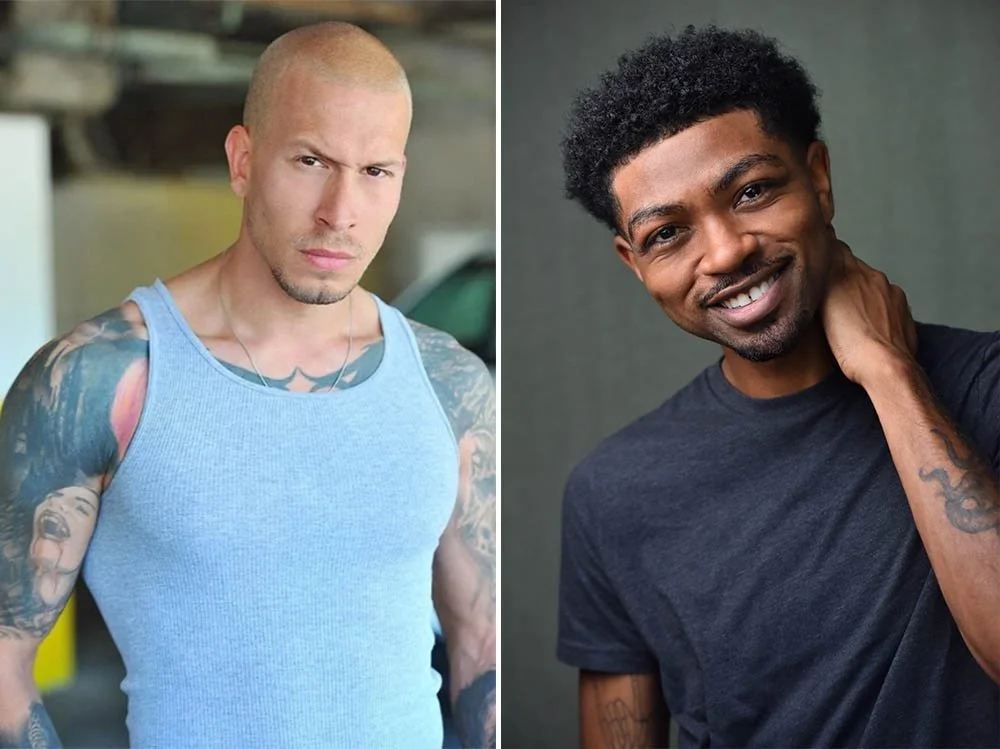
Everybody has rules about this, and none of them are absolute. For most rules I could show you someone who broke it and did remarkable work anyway. Richard Avedon built a career on repeating similar plain backgrounds, and I seriously question the person who would call his portraits flat or boring. Understanding why a convention exists matters before you decide it doesn't serve a particular photograph. Photographers who get too rigid in their own style, who don't shift at all depending on the actor in front of them, tend to produce work that says more about the photographer's aesthetic than about the specific person they photographed. That can still be beautiful work. It's just a different conversation.
I think of those less as broken rules and more as moments where I tested my instinct instead of just trusting it. I had an actor request a black background once. I knew going in that it could risk making them look like a floating head if I wasn't deliberate about it, so I adjusted my lighting and crop accordingly, and it turned out to be one of the stronger shots I've done. Another time, an actor wanted a color I wasn't personally drawn to. I worked with it instead of steering them away from it, and it turned out better than I expected.
Art isn't about applying one formula to every person who sits in front of the camera. It's about discovery. My process with one actor isn't my process with the next one. Something that doesn't work for twenty people might be exactly right for the twenty-first.
Wardrobe Comes First, Background Responds
Once we've established what we're trying to get from the shot, wardrobe becomes one of the biggest factors in my background decision. I choose clothing first, working within what the actor brings to set, and the background reacts to that.
If the wardrobe is detailed or busy, I'll usually simplify the background so the two aren't fighting each other. Color is where you can have real fun. A monochromatic look, wardrobe and background in a similar tonal family, can feel sleek and stylized, almost like it's isolating the person. Contrast does the opposite. It can add energy, and be great for a big personality or a more comedic read. Contrast can also evoke sharpness and power. A dark suit against a stark white background can feel sleek and powerful. Either way, the actor's actual personality has to be able to carry the choice. If the stylistic decision outshines the actor, the actor ends up feeling flat by comparison.
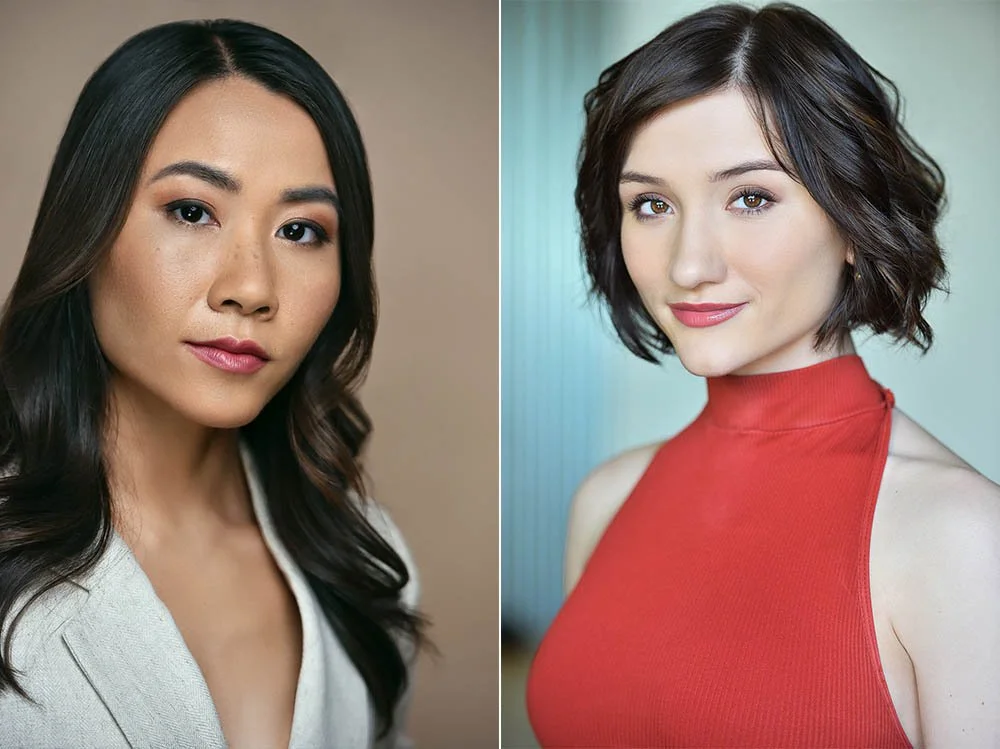
There have been times I've thought a particular color would look beautiful against someone's skin tone, and we've tried to work it in. But the final call is always whatever helps that actor pop the most, not whatever I personally find interesting. Wardrobe and background both exist to support the story the image is telling. Neither one is the story.
Does the Background Need to Suggest a Role?
Some photographers believe the environment behind an actor should hint at their casting type, put them visually in a world that signals what kind of role they could play. I don't build my work around that idea, and I think it can actually work against the actor.
The actor is the one being hired, not the background. I don't believe in costumes in a photograph. I don't need to see a stethoscope, or a hospital in the background, to believe someone could play a doctor. I want to see the qualities in the actor's expression that make me think of a doctor. Authority, compassion, and quiet competence, or some combination of these, are all things that could say that. The unique qualities of an individual are where the authenticity lives. Once you start indicating a role through props or setting instead of through the person, it can start to feel like it's reaching, and that reach shows.
That said, using background to support a mood is a different thing than being literal about environment. If a more literal approach is working for a photographer and their actors, I'm not going to tell them their process is wrong.
Indoor vs. Outdoor Actor Headshot Backgrounds
Whether to shoot outdoors comes down to photographer and client preference more than anything universal. I've had actors tell me they only feel like they look good outside. Most of the time, once we dig into it, what they're actually responding to is the light, not the location, and that's usually something I can recreate indoors with more control.
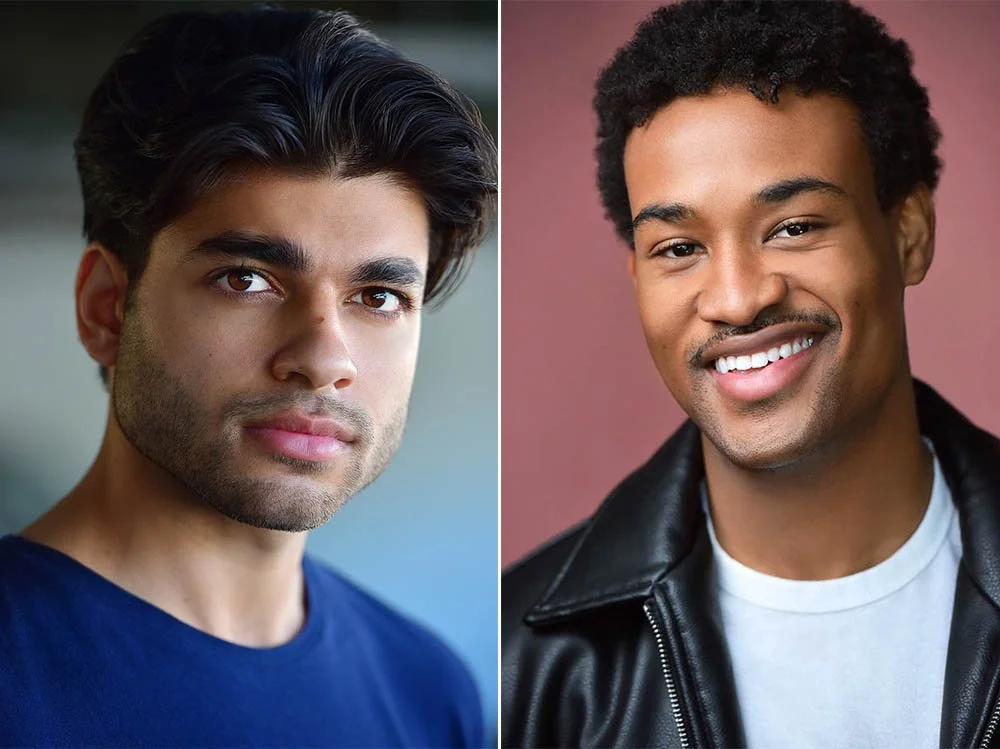
I prefer shooting inside, for the control and the privacy. Weather, passersby, and unpredictable light can be one more thing pulling an actor's focus away from the work, and a session already asks a lot of someone. For me, privacy and control tend to help actors stay focused on the work. When a client specifically wants an outdoor session, I ask what they're drawn to about it first, and I'm not married to one approach if a request is within my skill set.
When I am shooting outside, I'm also checking for anything that looks strange or distracts from the actor, a pole or a tree appearing to grow out of someone's head, a window frame or sign intersecting awkwardly with their body. Shooting indoors, in a controlled space, mostly removes this problem before it starts.
If you notice the background before you notice the person, something isn't working. That doesn't mean the background has to be invisible or boring. It means it should never become the thing the viewer is paying attention to.
Trends Change. Good Judgment Doesn't
I've been shooting professionally since 2005, and background trends have shifted more than once. When I was starting out, it felt like every photographer, myself included, was shooting actors under a bridge somewhere. These days I see a lot of colored, textured, aged muslin backdrops.
A background can become associated with a particular era or trend, but that doesn't automatically make the resulting photograph look dated. A trend can come back around, or a photographer can make an older approach feel current through execution. I wouldn't tell an actor to avoid a background because it was popular five years ago.
Common Actor Headshot Background Mistakes
A few issues come up again and again in headshots I'm asked to update or in work I see online:
Background and hair too close in tone, so the two blend together
A background whose mood doesn't match the actor's energy or the purpose of the shot
Busy or distracting backgrounds that pull the eye away from the face
Backgrounds that feel like a cliché or a costume rather than a photograph
Background detail or sharpness that competes with the actor
Backgrounds that lose detail in a way that distracts from or flattens the actor
Standing too close to the background when it causes the actor to lose depth or separation
How to Know if Your Headshot Background Is Working
When actors ask me what background they should use, I'm already thinking through most of what's above, and I'll ask them a few things in return. Do they have a color preference? Do they have a vision for the shot? Most people walk in with some sense of what they're expecting, even if they haven't put it into words yet. I want to understand that, and then bring my own eye to it, because they hired me based on the work in my portfolio, and I'm not going to abandon what got them in the door.
At the same time, the session isn't about me. I'm there to represent that actor's skill, personality, and vision, even though it's happening through my lens and my choices. The actor needs to walk away with something that helps them show casting who they are, not a demonstration of how I like to shoot.
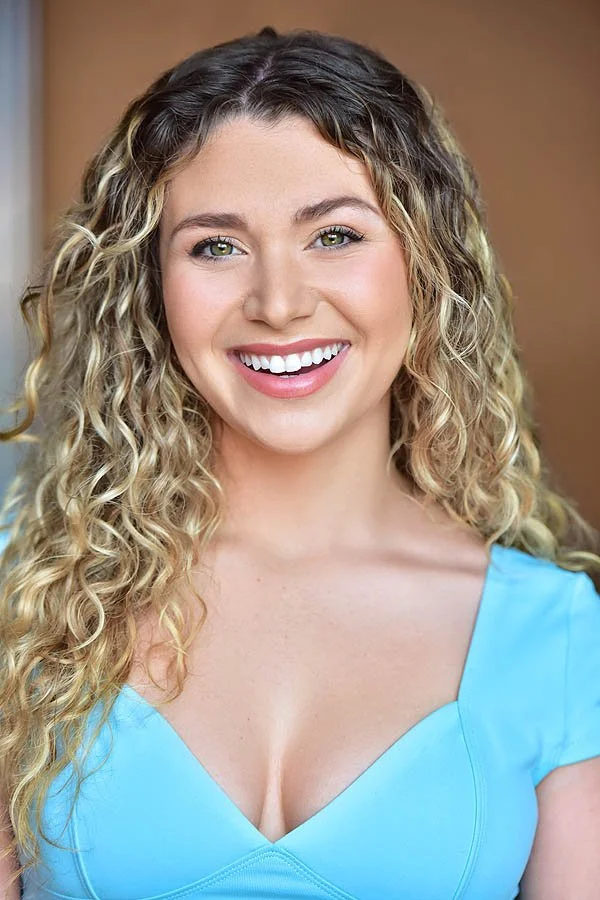
If you're looking at your own headshot and trying to judge whether the background is helping or hurting, ask yourself a few questions. Are your eyes the first thing someone notices? Do you separate clearly from what's behind you? Is anything in the frame pulling attention away from you, a color, a highlight, a shape? Does the background feel like it belongs with the image, rather than like it's trying to tell casting who you are before you get the chance to?
The background's job isn't to be the star of the photograph. Its job is to support the actor who is.