
Ask five people what a theatrical headshot is and you may get five answers. Some mean the serious shot, as opposed to the warmer, friendlier, more approachable commercial shot. Some mean anything used for TV and film. Some hear “theatrical” and think theater. Before a session, I always make sure I understand what an actor means before we dive in.
For this article, theatrical means dramatic work: TV, film and stage. I put commercials and comedy, including sitcoms and romantic comedies, on the commercial side. Other photographers and agents draw that line differently, and a comedic role can still call for a theatrical shot. If you want the basic distinction first, start with the differences between commercial and theatrical headshots. This piece is for the next step: you have theatrical frames in front of you, and you need to judge them.
What a Theatrical Headshot Has to Do
I start with the eyes. I feel everything a headshot needs begins there. Do I believe this person is feeling something? How much impact does the gaze have? Do I come away understanding something about them?
For me, the difference is connection. I feel connected when there’s intention behind the gaze. When someone looks straight into the camera, I’m connected if I feel they’re looking at me, and disconnected if they seem to be looking through me, or the gaze has nothing to do with me. You can feel it the same way you can tell when someone is daydreaming.
Still or serious doesn’t mean boring and emotionless. A theatrical shot that works has presence. It gives me an interpretation of who the person is, or an idea of who they could be, and it makes me want to know more. I like to look at a shot and be able to tell a story.
The photo is always about the actor. If I see more of the photographer’s work than I see of the actor, the shot has lost its purpose. Light so dark it starts concealing the person is one way that happens.
A mismatch between the photographer’s style and the actor’s needs is another. I can usually guess which headshot photographer shot an image from the lighting and the way they use backgrounds. That isn’t a problem on its own. It becomes one when the technique doesn’t fit what the actor needs at that moment. If a photographer shoots moody all the time and the actor needs color and brightness, or a photographer leans bright and commercial and the actor needs weight, you can feel the photographer’s voice in the image, and it can compete a little with the actor’s. That’s part of knowing how to choose your headshot photographer.
Distractions are another. A busy background, busy clothing, or an awkward contrast that pulls your eye away from the actor’s eyes can all take away from the point of the photo, which is the actor’s presence.
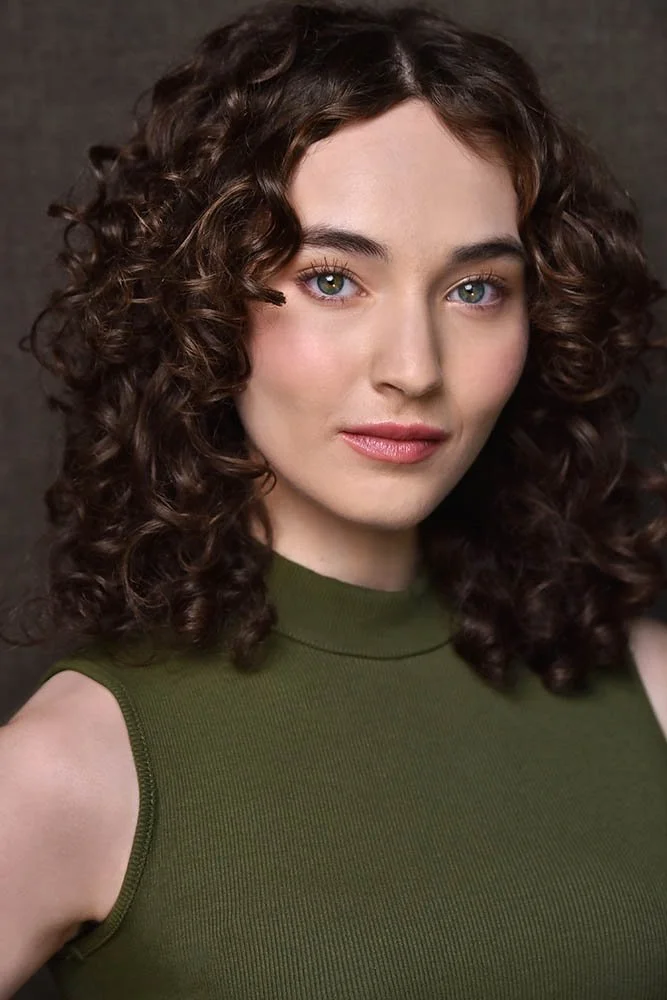
In this frame, the dark, earthy tones of the backdrop and her top already lean the shot toward something more serious and dramatic. Nothing else competes with her. Her expression is quiet, and what holds the frame is her gaze.
Does a Theatrical Headshot Have to Be Serious?
Not to me. It really does depend on the character. I don’t tend to shoot huge toothy smiles for theatrical, but I think there’s room for warmth. The expression should be an extension of who the person is. Smirks and subtle warmth can be very powerful in a theatrical shot: the big brother who will always have your back, the proud friend.
What changes is where the smile is aimed. I tend to think of a commercial smile as outward and expressive. It wants the world to know. A comedic shot may be larger than life. A smile in a theatrical shot tends to feel more intimate, like someone having a laugh with a close friend. The commercial version has the energy of getting a whole room excited about a day at a theme park. I go further into commercial smiles in How to Evaluate Your Commercial Headshots.
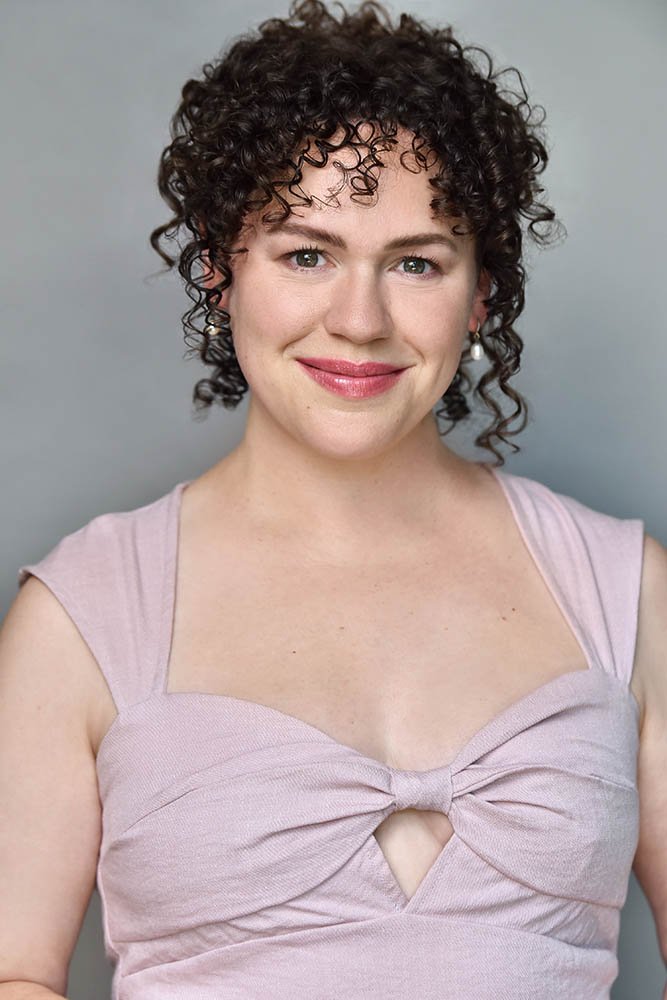
This frame is warm and friendly. She could be in the middle of a supportive talk with you. She feels capable, like she knows the truth, with a wisdom and confidence she doesn’t have to perform. On a quick scroll, the pink top and soft grey backdrop might get her filed under commercial. Look at her eyes and her closed mouth, and the warmth feels like it’s meant for one person.
Light changes how warmth reads, too. Sometimes I add a little moody lighting to a shot, and that can give a laugh a more lived-in, personal feel. A moodier laugh can still be used commercially; to me it just suggests a different mood, and a different kind of product. In my work, brighter light combined with an open laugh tends to tip a frame toward commercial.
The reverse matters too. Some people come across as positive and inviting even in their serious moments. Asking that person to play dark and brooding in the frame can feel like a costume. I can still bring in moodier light, and their warmth reads as more personal and intimate inside it. Almost everyone has a serious side, or something they’ve been through, and sometimes that makes the most interesting shot: warm and friendly with a moodier undertone.
What Makes a Theatrical Expression Convincing?
When a theatrical shot doesn’t work, one of the things I notice is that the person is just staring. They aren’t looking at anything. They’re asking nothing of me emotionally. Sometimes they look lost, as if the shot is swallowing them.
Another version of the same problem: the actor is trying to project a type that doesn’t feel convincing in the photograph. Then they can look like they’re in a costume, figuratively and literally, instead of living a character.
Lighting shapes how an expression reads, too, and it’s another thing I notice. For me, dramatic shots can feel more still. By still, I mean an expression where very little is happening outwardly, but I can sense something more beneath the surface. There are no obvious gestures of an emotional state; the energy behind the eyes tells the story, more than movement or posture. That stillness makes you look closer, so details are felt or noticed a little more, and that includes the light. Recently an actor came to me because their agent didn’t like the headshot they had. The lighting felt dated and amateur, and it made them look a little sweaty, less in a literal way than a smarmy one. They needed new shots that felt modern and kept the attention on them.
Framing varies more than people expect. Some agents want three-quarter shots, some theatrical agents want a little closer, and many give me freedom. It depends on preference. When the frame is tighter, you’re really getting in the eyes. There’s no movement or performance to help sell a story, so most of it comes from the energy and eye focus the actor is giving out.
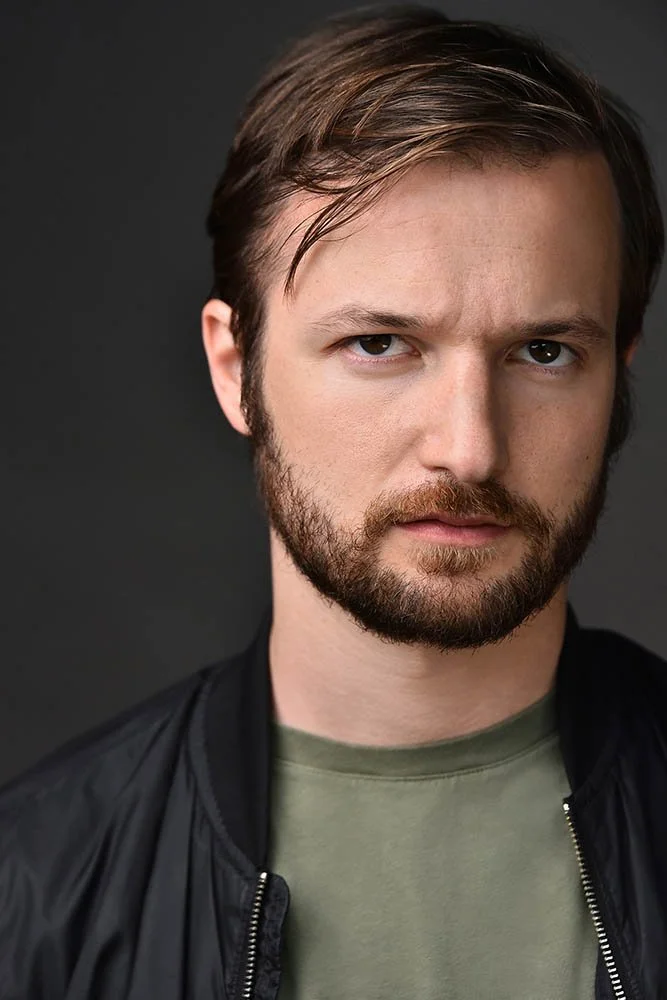
In this frame, his brow is set and the rest of his face stays quiet. The intensity sits in his eyes, which is where I want it in a frame this close.
How I direct depends on the actor and the character. Sometimes I ask people to think about something that truly means something to them. I don’t have to know what it is. Sometimes I ask questions. Mostly I try to create a space where people can be free with their thoughts, internally or out loud. I never force anyone to give away their deep secrets, but I can usually feel when there’s no clear intention behind the expression.
Not everyone finds inspiration in personal stories. For those actors, we build a scenario they can explore. Either way, it has to come from a place of authenticity, and that varies from actor to actor. The one thing I tell everyone: never lie to your audience.
How Light and Wardrobe Change the Read
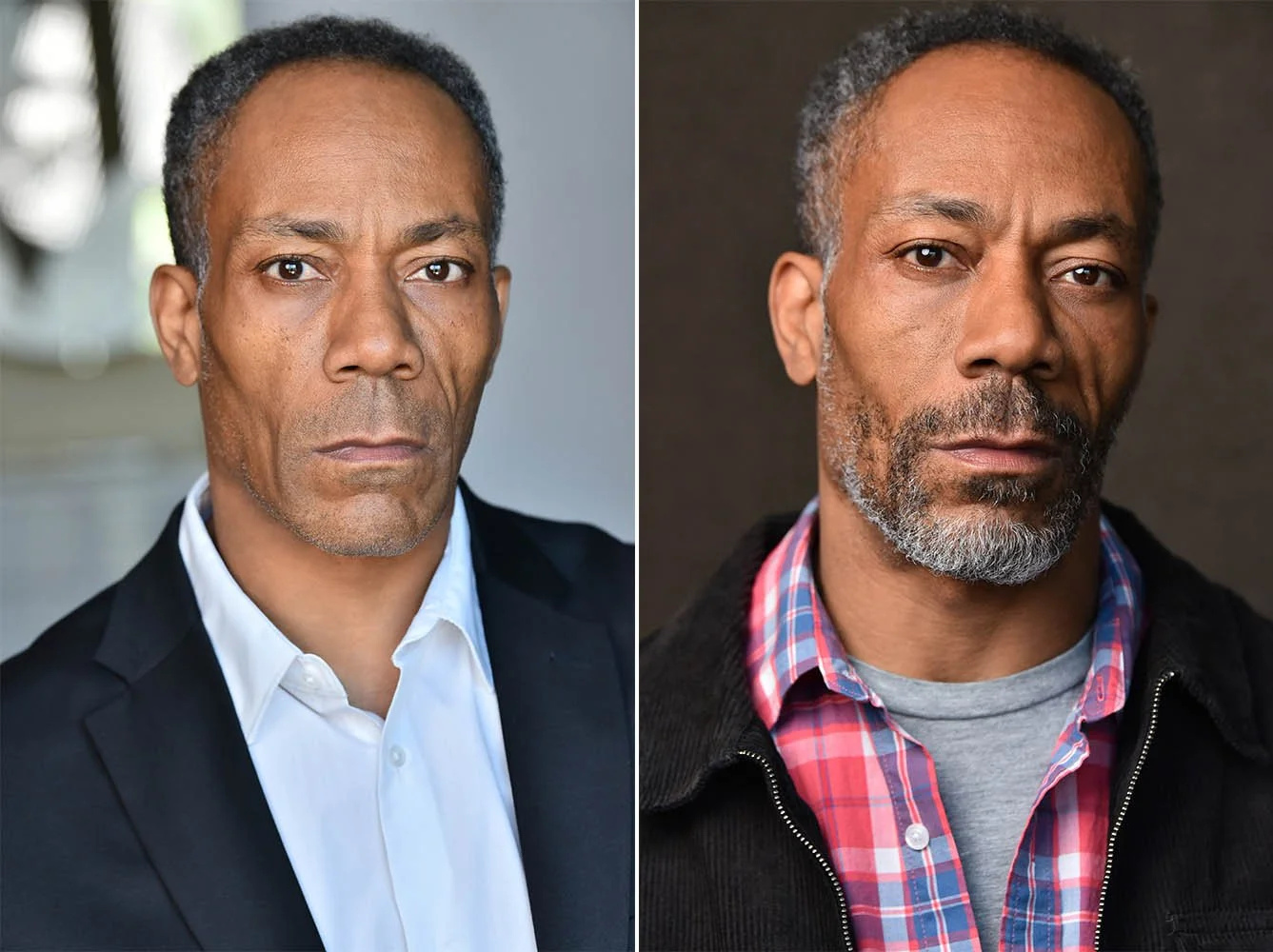
I tell actors that each headshot in their gallery should give me new information. The same face in different clothes isn’t hugely helpful. Across two serious shots, some overlap is expected, but I still try to get a little variance.
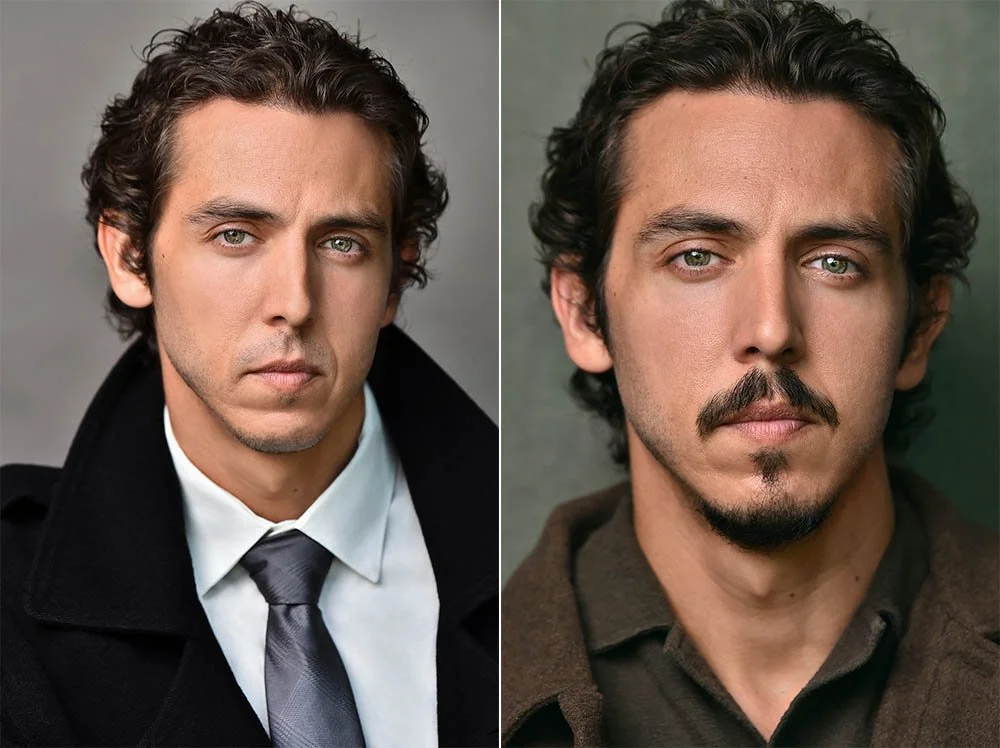
These two frames show what that variance can look like. Both are serious, and both are stoic. In the plaid shirt against the dark brown backdrop, he reads a little more vulnerable. In the blazer and white shirt against the gray, he reads more determined. Two serious shots can mean different things.
Both could be used for a dramatic audition, but I think they serve different kinds of casting. The lighter frame keeps all of its seriousness, which is worth remembering if you’ve been told theatrical has to mean dark. When moody falls flat for me, it’s usually because the mood doesn’t feel natural or convincing on that person. I want the light to serve the person in front of it. You can see more of this range in my men’s actor headshots.
Wardrobe works the same way. It should support the read you’re going for without becoming the subject of the photo. For specifics on fabrics, colors and layers, see What to Wear for Actor Headshots.
Does It Still Work as a Thumbnail?

Your theatrical headshot may be judged small before anyone sees it large. On Actors Access, the thumbnail is “a smaller version of the photo that Casting will see first when reviewing submissions” (Actors Access). When casting forwards selected actors to a director or producer, one option is “Thumbnails Only,” which “will only showcase the actor’s headshot” (Actors Access).
So I test every theatrical frame at that size. I shrink the photo down to a thumbnail and see what it feels like. I also look at the contrast, color and lighting ratios, and at how the light separates the face from the background, because that’s what creates the pop and tension that still read small. I also make sure skin and hair aren’t too close in tone to the background.
Here are this article’s photos at roughly thumbnail size. Every face still reads. The tighter crops make the eyes and expressions more prominent.
When you upload to Actors Access, there’s also a Thumbnail Editor step where you can check the crop (Actors Access). Use it to make sure your eyes sit comfortably in the small version.
Choosing Between Two Strong Theatrical Headshots
You don’t need one theatrical headshot that does everything. On Actors Access, the headshot casting sees is “the photo you or your Talent Representative selected to send as part of your submission” (Actors Access). The photo can change with the role.
Before comparing what two frames communicate, I want both to look like the actor who will walk into the room. A compelling expression doesn’t help much if the photo no longer looks like the person.
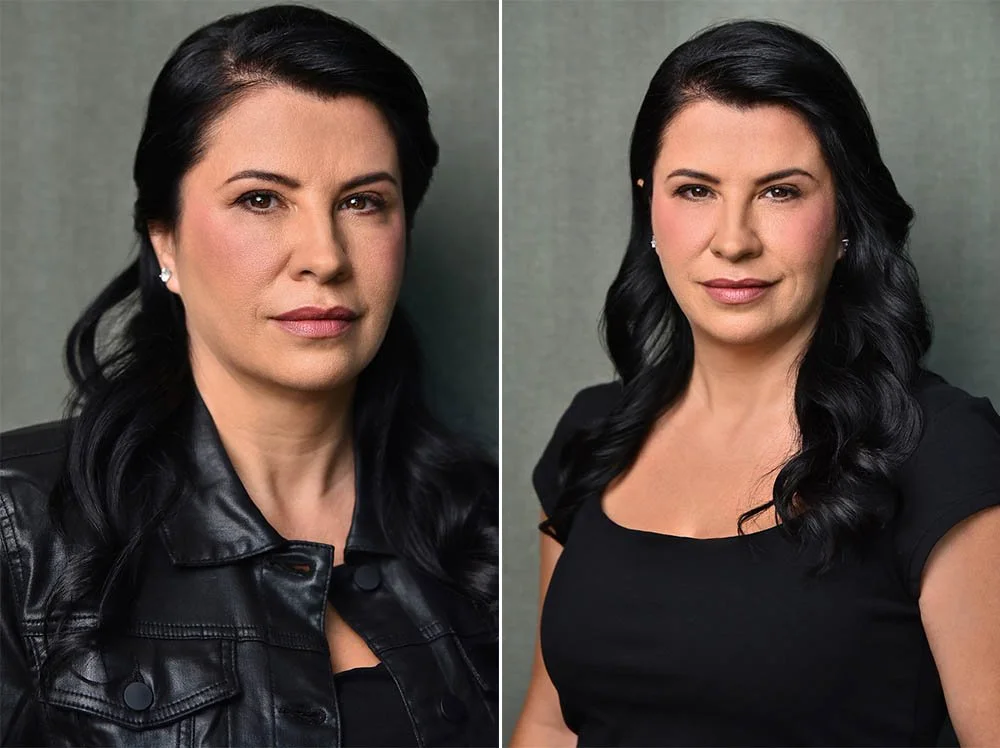
That’s why I want no two frames in a set doing the same job, and no single image trying to do too much. These two frames show how little has to change. The backdrop is identical. Only the wardrobe, the crop and the expression move.
In the leather jacket, the crop is tighter and her hair is pulled to one side. She reads guarded and steady, like someone you don’t push. In the scoop neck, the crop opens up, her hair falls forward, and there’s a hint of a smile. She reads polished and composed, with warmth under the authority. Both are strong. Which one leads depends on the role.
This is also where your agent or manager comes in. Agents and managers see the breakdowns for the roles they submit on, so they see what’s happening in the moment. Aside from reading the trades and staying current on what’s being made, I talk to my agent friends often to hear what’s in the pipeline, which types of characters they see traction from, what’s getting called in and what tends to land flat.
Different agents also come from different experiences and points of view. What works for one may not work for another. I’ve had actors come in excited to start selling themselves as one character, and their agent isn’t on board, or has a different sense of which types are getting attention from casting. Because agents don’t always meet their actors in person, I’ve also seen agents select shots based on who they think the actor is. And I’ve had every kind of request, from the background an agent is certain gets all their clients booked to a framing they like.
It all leads back to the same advice: talk to your reps before the shoot, so everyone is on the same page about what each frame needs to do. At Marc Cartwright Headshots, that conversation shapes the session before the first frame is taken.
Sources