
I see this often. An actor brings me a set of three headshots. The shirt changes in each one. The pose, the expression, the hair, the makeup, the lighting and the overall vibe stay exactly the same. Literally nothing tells me anything about the actor except that they can change shirts.
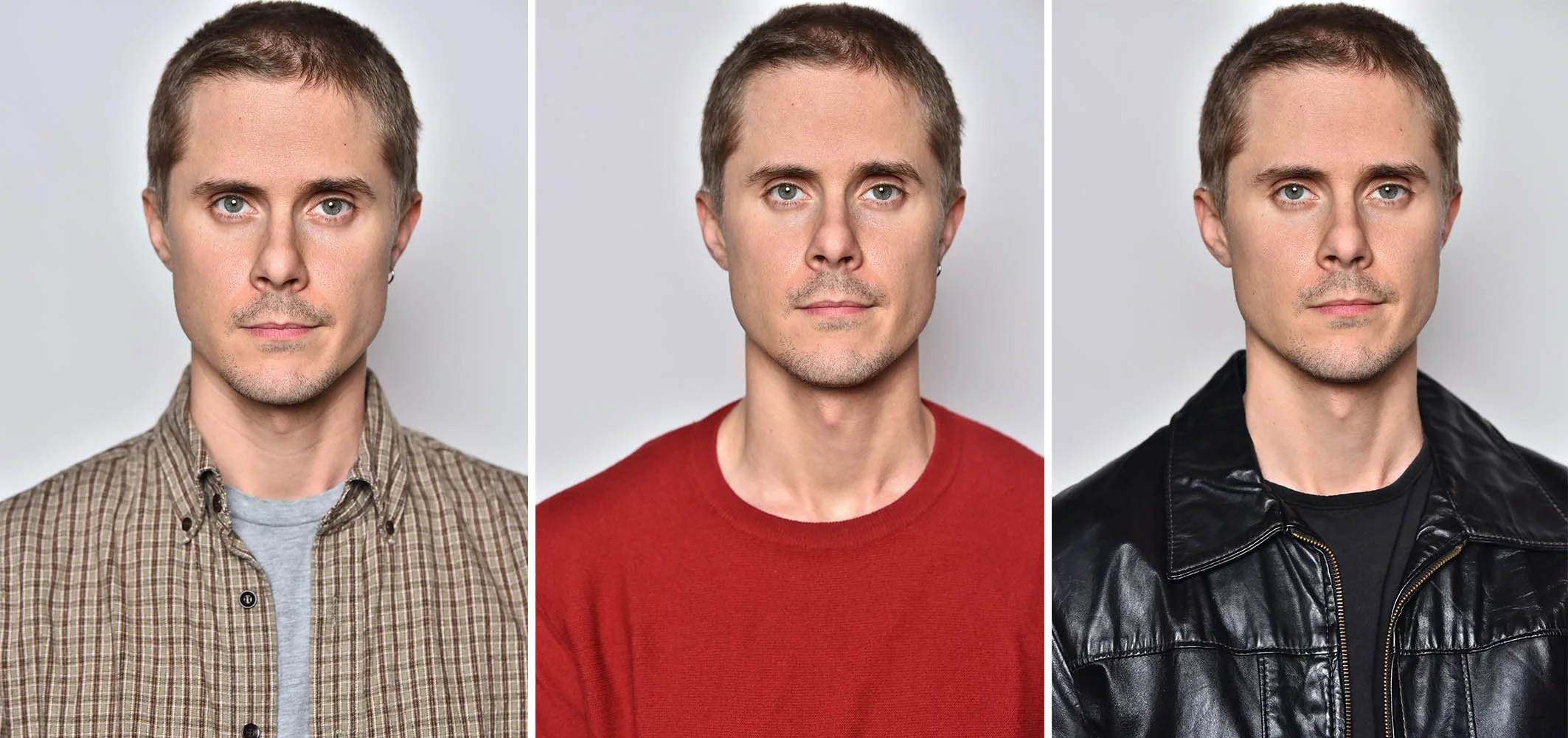
Staged for this article: one expression, three outfits. For illustrative purposes only.
How many headshots you need is the first question. The second is how you are going to make each of those shots different. My answer to that one is simple: if you can’t make the case for a different shot, it shouldn’t be done.
I’m not saying you can’t get more than one idea out of a look. You can, and I’ll get to that. But every frame you use should give casting information they can’t find in another frame. In my experience, a set that misses that makes an actor look flat, and it can read as amateur.
On Actors Access, when you or your agent submit for a role, the photo picked for that role is the one casting sees first. So each frame has to work on its own, and the question I’d ask of any two frames in your set is: when would I submit this one instead of the other? If you can’t answer it, you have one shot, twice.
I touched on this in How Many Headshots Does an Actor Need? Here I want to go further: what redundant headshots actually look like, why they happen, and how I plan a session so every look has a reason to be there.
What Counts as a Headshot Look?
It helps to separate two things: the look you shoot and the frames you end up using. I use “look” for the setup we shoot: the wardrobe, hair, makeup and background for part of the session. The frames you choose from that setup are the headshots you’ll actually use.
One look can give you two useful frames that serve completely different submissions. Three looks can give you three frames that all do the same job. The number of outfit changes doesn’t tell you much. What matters is how many different things your final frames say.
The Redundant Headshots I See Most Often
Same everything, different shirt
This is the set I described at the top, and it’s the biggest offender. Only the shirt changes, so the second and third frames are just taking up space.
Different looks that say the same thing
This one is harder to spot, because the photos can look very different at a glance. Say an actor shoots two business looks, and both read as the type A, uptight CEO boss. You don’t need that in a blue suit and again in a black suit. We get the point.
If you paid for those looks, the second one is wasting your money and your session time. A better use of it might be the CEO boss in one look and, in the other, a blue-collar manager who reads as checked out, if that’s a type you actually play.
Different looks are different opportunities to express your range and to show casting the levels and nuance of your craft. That doesn’t mean you have to play dress-up and show every little thing. One look can cover a few different ideas. But if a second look isn’t giving me much, or isn’t changing how I see you, I don’t see the point of it.
New headshots that repeat the old ones
This one is easy to miss because the photos are new. An actor books a session, and the new headshots say the same thing their current ones already say. There’s no physical change to show either: same hair length and style, same facial hair, same age and weight. New headshots should give casting new information. If they don’t, you’ve paid for photos you already had. The exception is a new shot that does the same job better. In that case, replace the old one.
Why Actors End Up With Redundant Headshots
I think it happens for a few reasons, and usually more than one at once.
The actor believes a new shirt reads as range. Some people genuinely think a change of clothes will make casting see them as more versatile.
The photographer isn’t directing. Pulling variety and nuance out of someone is part of the job. If the photographer isn’t doing that, you get the same frame in every look.
The actor’s range is limited. There is nothing wrong with that. If that’s you, sell what is there. Don’t try to use multiple images to create variation that doesn’t feel or read as authentic.
The preparation goes to the wrong place. Many times I see people plan a shoot for weeks. They ask all the important, thorough questions about wardrobe, makeup and hair. But they never talk about why we are there: the acting. All that time and energy goes into the look, and the anxiety about getting it perfect crowds out any preparation for the emotional work.
Of course we want every element right. But once that’s handled, and if you’ve researched the photographer you hired, let it go and trust that the aesthetics will come together. Once you’re sitting in front of the camera, your job is to make choices about performance and emotion, so that you feel it in the moment and the people looking at your headshot feel it behind your eyes.
You’re literally asking people to spend two hours watching you. Some of them are buying a ticket, too. No one cares if a single tiny hair is out of place, especially one nobody can even see. They will care if you look like a deer caught in headlights in all of your headshots.
What Changes the Read Most: Performance
Since we are talking about actors, I think the performance is the most important thing in a headshot. We aren’t trying to cast hair, wardrobe, background or posture. A hair and makeup change can certainly make someone look like a completely different person, and I’m not talking about that kind of transformation here. Even then, I think the performance matters most, and the other elements support the shift. And performance alone can shift how someone is perceived even when nothing else changes.
These two frames are the same actor in the same shirt, against the same background, with the same hair. The crop and light shift a little, but the outfit stayed put. To my eye, the performance is what changed the read.
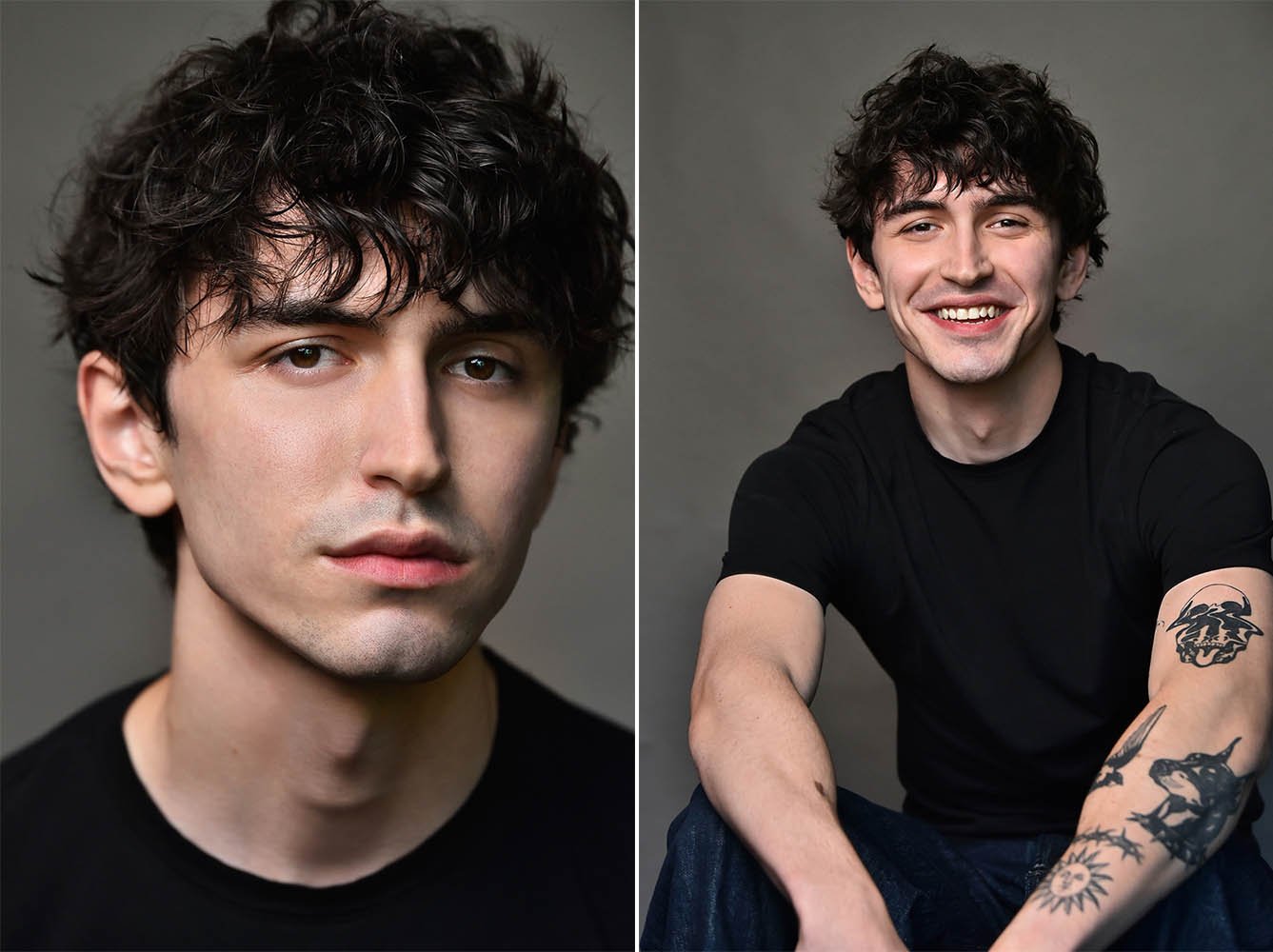
This is why I still give variety within a look, even when an actor comes in for only one. One look might give them both a commercial and a theatrical shot. If you’re not sure where that line falls, I break it down in Commercial vs. Theatrical Headshots.
Or take a blue-collar look. It can serve the victim role in a procedural. Then, with some further direction, the same look can become someone who has hit a rough time and isn’t standing for it, someone who refuses to be a victim and shows strength and determination. A headshot can’t tell casting that backstory. But giving the actor that backstory in the moment is how you get two frames with different energy behind the eyes, and that difference is what casting sees.
How I Make the Case for Each Look Before the Session
A good starting point is what you already have. What do your current headshots cover? If a role came up tomorrow, where would you be stuck for a photo? That gap is usually where a new look has the clearest reason to exist.
From there, I ask the actor the three questions so that I can understand their goals. Then I look at the answers and separate out the adjectives and ideas that live well together.
Say an actor gives me these words: funny, villain, romantic, sweet, bossy, quirky, edgy. I might group them like this:
Funny and quirky
Villain, bossy and edgy
Romantic and sweet
That gives us three ideas to work with. Now I want to know when you’d actually use each shot. (This is a different exercise from figuring out your casting type, where you ask other people how you read. I cover that in How to Identify Your Casting Type.)
The grouping is only the start, which is why I also sit down and talk with the actor. They may be a funny villain, or edgy with a soft heart. That nuance is what makes people unique and interesting, and I want to understand the layers of a person before I pick up the camera. Otherwise, in my eyes, I am operating a factory. No actor should aim to be a generic person in a photographer’s studio. Each person who walks in has a unique perspective, and it’s my job to explore it.
Example: One Actress, Three Looks That Say Different Things
These three frames come from one session. We went in with a plan, and we knew from the start that a comedy shot was part of it.
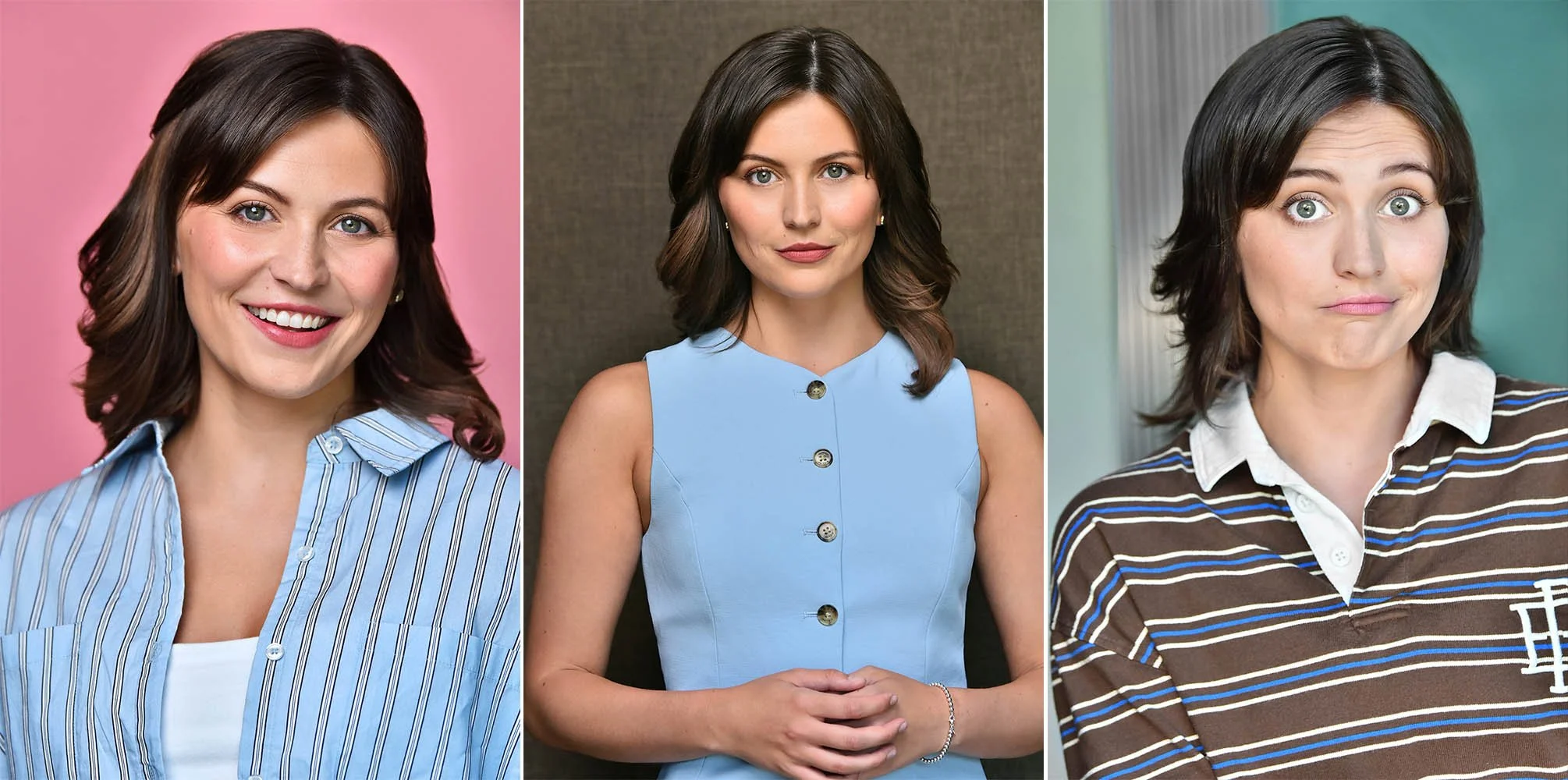
I’m not going to tell you what each of these is. Look at them side by side and ask yourself: what would you submit each one for? What do you see in each frame that makes you reach for it? The hair, wardrobe and background change with each look, and they help. The performance is what makes the answers different.
Example: One Actor, Two Looks, One Session
Planning also decides the order of the looks. If a look depends on something you can’t undo, like facial hair, shoot it first. You can shave for the second half of a session. You can’t grow it back.
That’s what we did here. These two frames were taken the same day: we shot the first look with his facial hair, and he shaved for the second half of the session.
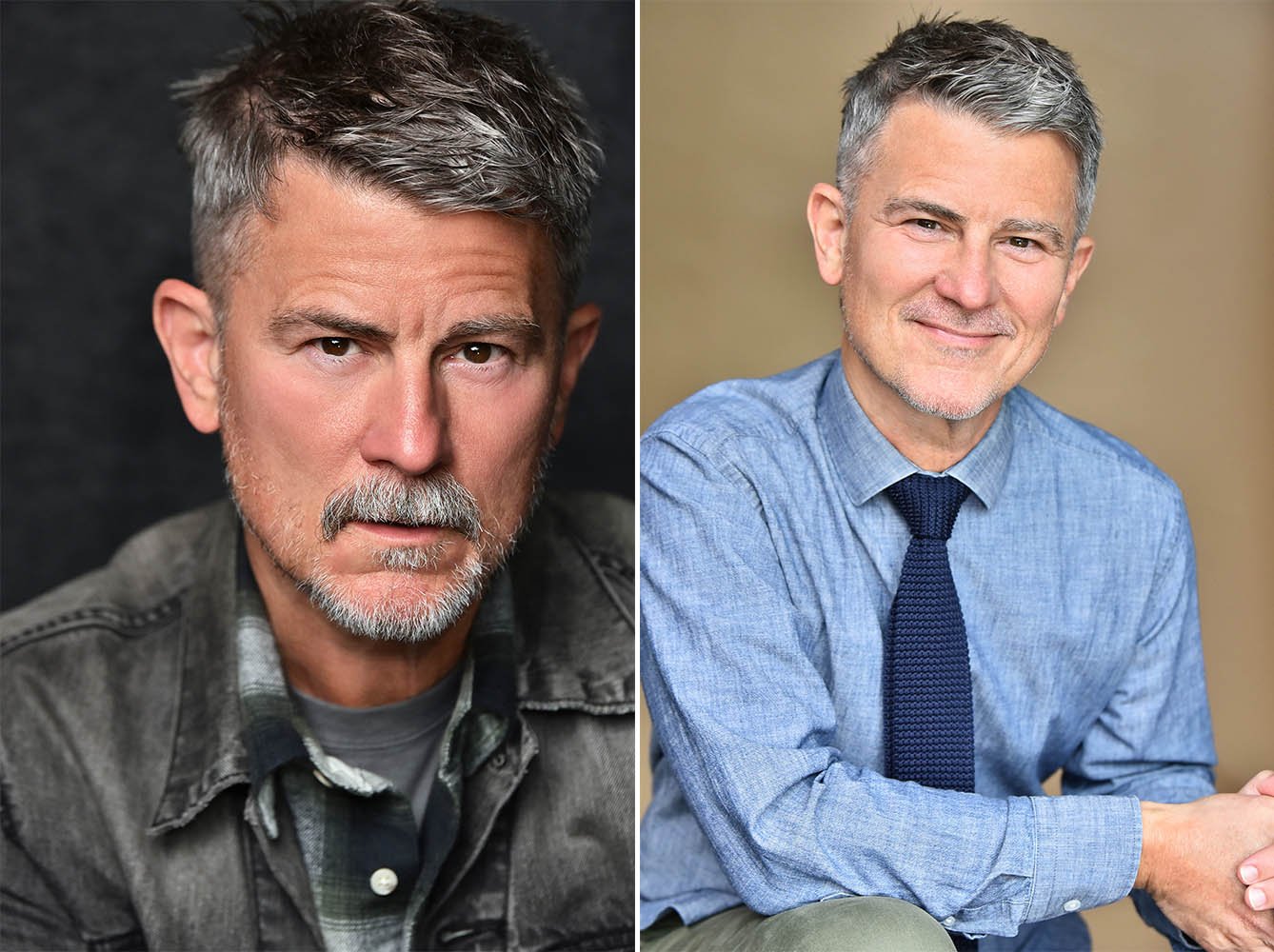
Who would you call in for each one? Unlike the black-tee pair above, wardrobe, grooming and background all changed here. This pair shows how far one actor can travel in a single session when the looks are planned.
I don’t demand that every actor be a chameleon. Sometimes one thing done well is all a role requires, and there are many successful actors who do one or two things well.
Sell What’s There
Not every actor has a wide range, and you don’t need one to have a strong set of headshots. What you need is for every frame to be true. Two looks that genuinely read as you will do more for you than four that are forced. If a look doesn’t feel authentic in the session, it won’t read as authentic to casting either.
How to Check Your Own Headshot Looks
Lay out the frames you’re actually using. For each one, ask what it tells casting that no other frame does, and when you’d submit it instead of the others. If you’d use two frames for the same kinds of roles, keep the one that makes the stronger case. If you’re planning a session, ask the same question of every look before you shoot it.
If you can’t make the case for a different shot, it shouldn’t be done.
If you’re planning your next session and want to talk through which looks will actually earn their place, that’s the conversation I like to have before anyone picks up a camera. You can see more of my work and book a session on the Actor Headshots page.